Human & Systems Organizational Design
Design for what the business needs while thoughtfully holding how people experience, understand, and bring organizational change to life.
The design conditions that make strategy usable
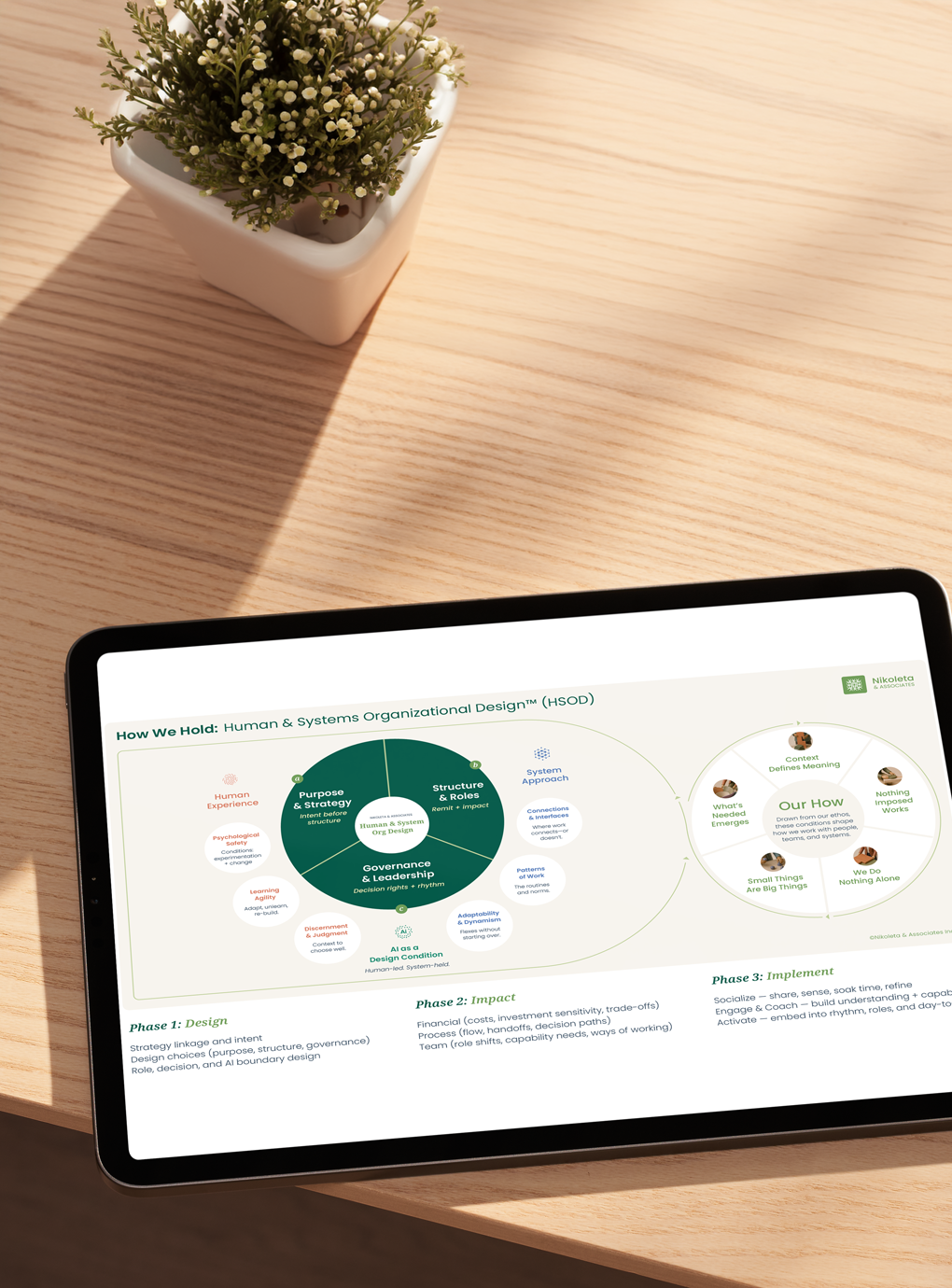
Human and systems organizational design connects purpose, structure, governance, experience, systems, and AI so strategy can become a lived operating practice.
Organizational design does not become useful because a structure has been drawn, a reporting line has shifted, or a future-state chart has been approved. It becomes useful when strategic intent is translated into choices people can understand, govern, and work through.
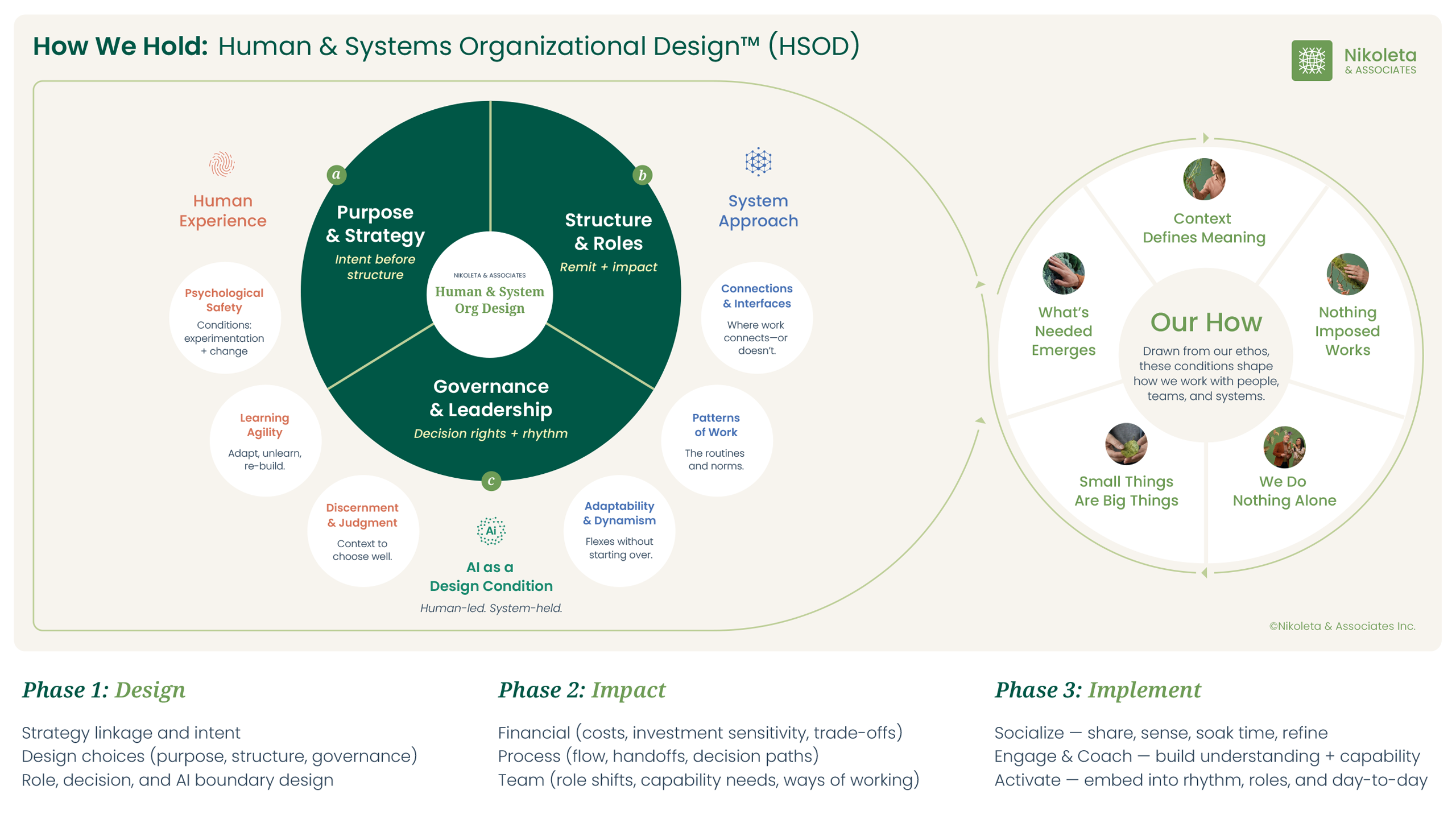
This is the work expressed in the Human & Systems Organizational Design™ model. It begins with a formal spine: Purpose & Strategy, Structure & Roles, and Governance & Leadership.
Purpose & Strategy anchors what the organization is here to realize. Structure & Roles clarifies where work sits, how contribution is defined, and how accountabilities connect. Governance & Leadership gives the design its decision pathways, leadership rhythms, and ways of holding direction over time.
This matters because design often breaks down when it is treated as an org chart exercise. The boxes may be clear, but the human and system conditions may not yet support how work actually moves, how decisions are made, or how people experience the change.
It is also why the model does not stop at structure. Human Experience, Systems Approach, and AI as a Design Condition are not add-ons. They are part of the design itself.
Human Experience asks whether the design can be inhabited: whether people have clarity, agency, safety, and capacity to move with the change. Systems Approach looks at the wider operating environment: how information, tools, incentives, routines, and dependencies shape what the structure can actually do.
AI as a Design Condition asks a different kind of question: not simply where technology can automate work, but how human judgment, accountability, workflow, and decision-making need to be redesigned when AI becomes part of the system.
In this frame, organizational design is not only a structural deliverable. It is the practice of making strategy coherent across the organization, the team, and the personal level, so the design can hold business intent and human reality at the same time.
MODEL LEVEL
Organizational Design
Connect purpose, structure, roles, governance, and leadership
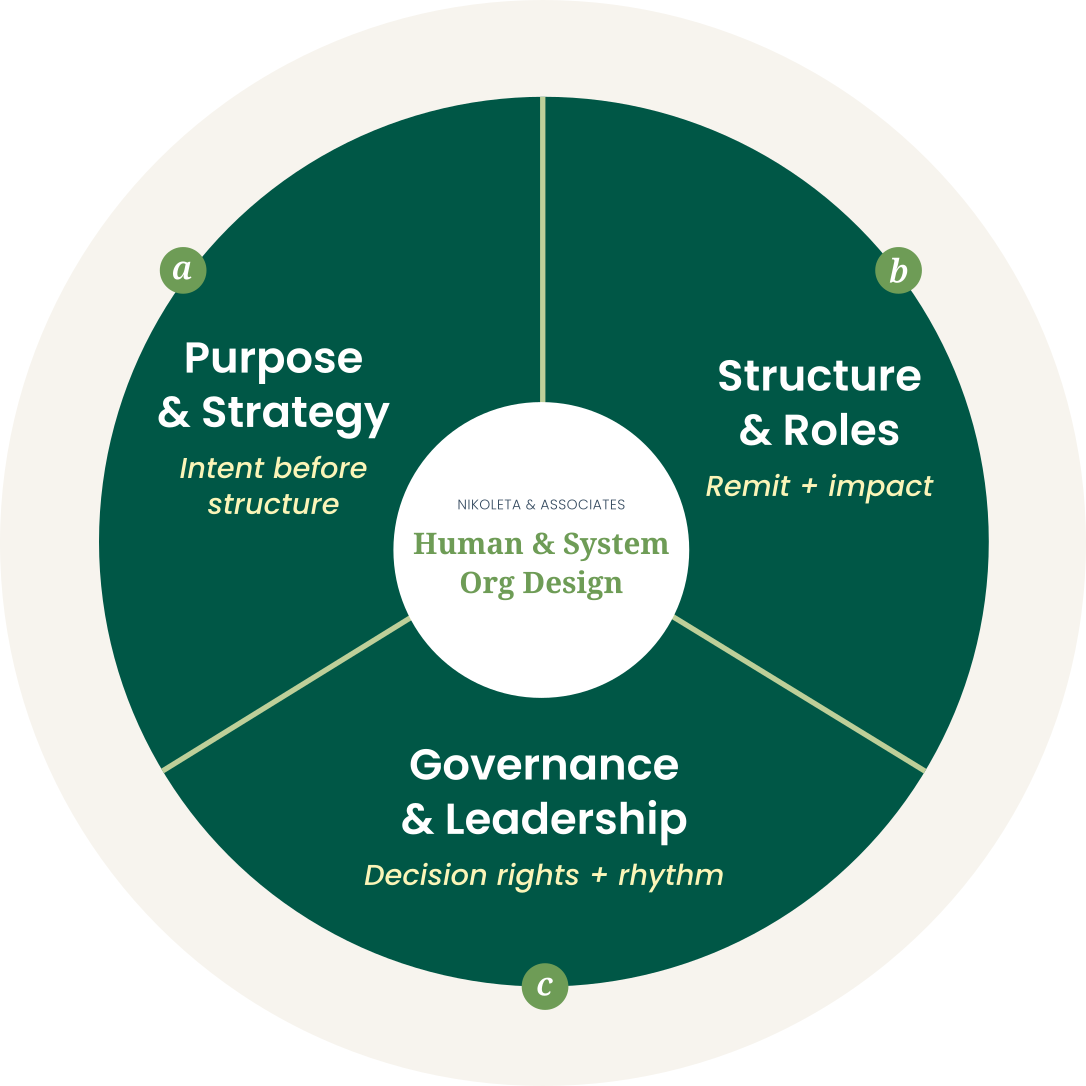
Human & Systems Organizational Design™ begins with a formal spine: Purpose & Strategy, Structure & Roles, and Governance & Leadership.
Purpose & Strategy anchors what the organization is here to realize. Structure & Roles clarifies where work sits and how accountabilities connect. Governance & Leadership gives the design its decision pathways, leadership rhythms, and ways of holding direction over time.
MODEL LEVEL
Human Experience
Hold clarity, agency, safety, learning, and judgment
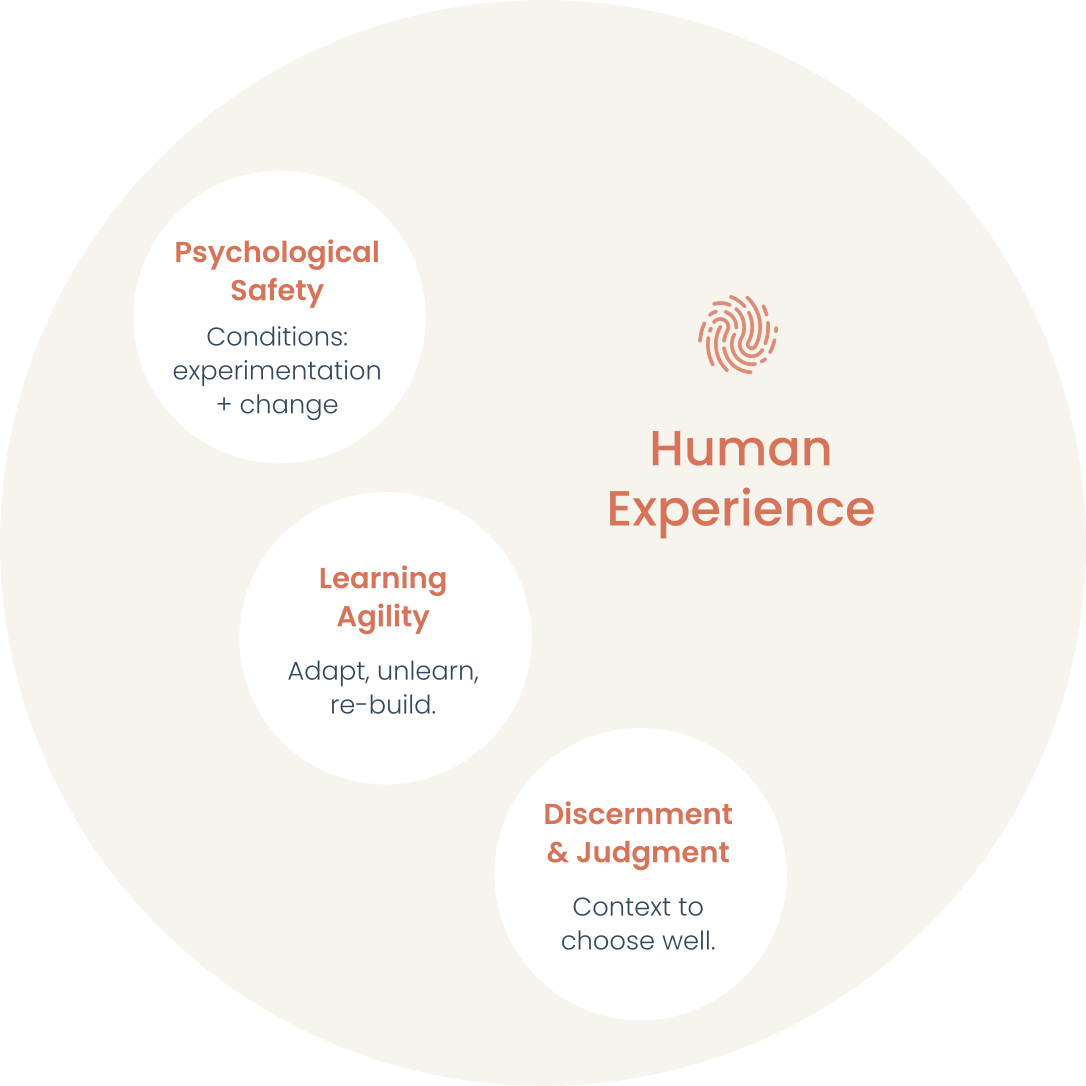
Organizational design changes more than structures. It changes expectations, relationships, identity, and how people experience their work.
We keep attention on the conditions that help people move with change: psychological safety, learning agility, and discernment and judgment. This keeps the person in view as well as the role.
MODEL LEVEL
System Approach
Connect interfaces, patterns of work, and adaptability
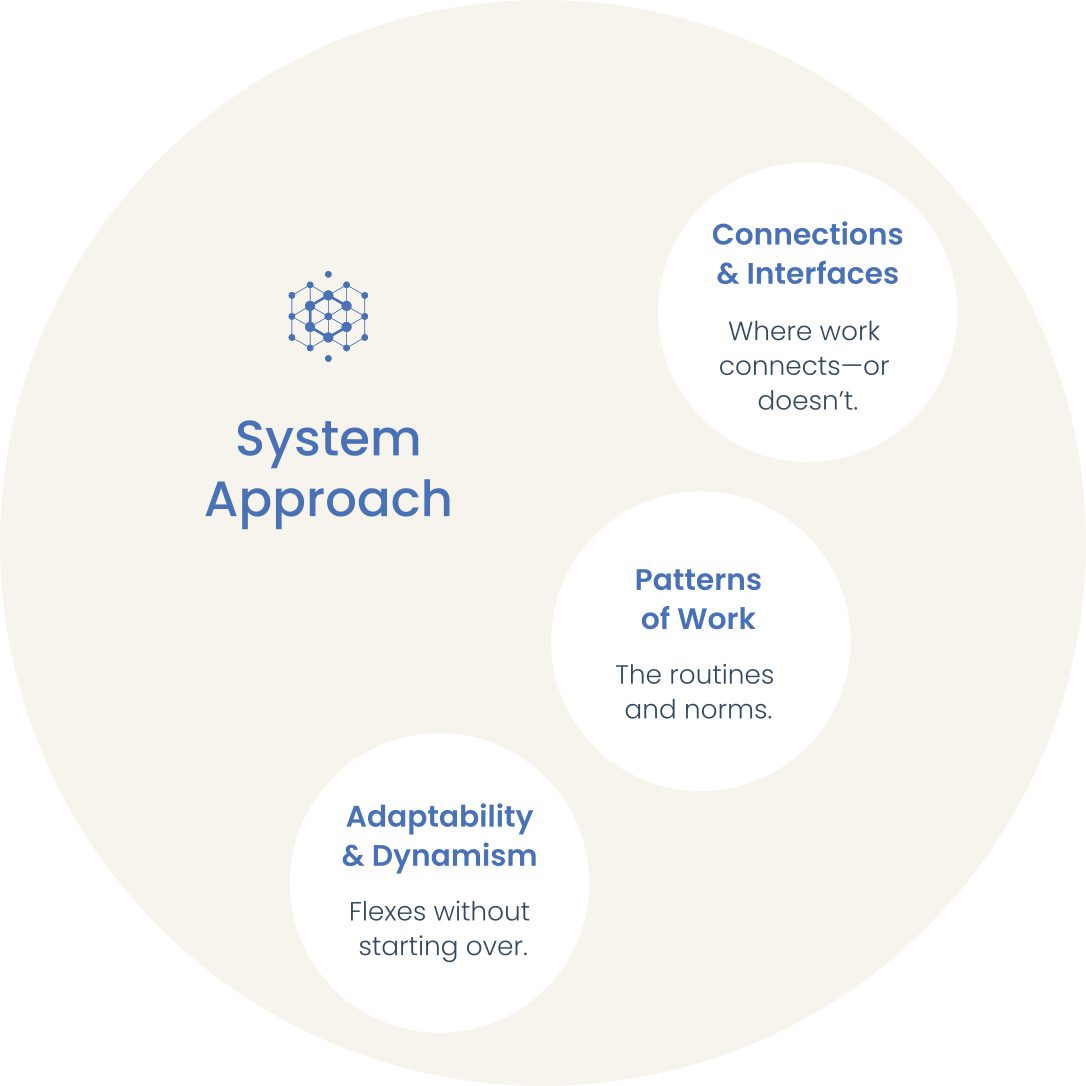
An organization is a living system of relationships, workflows, decisions, behaviours, and patterns. A change in one part will often create movement elsewhere.
We look across connections and interfaces, patterns of work, and adaptability to understand how design choices work together. This keeps the design dynamic, responsive, and attentive to the whole system.
MODEL LEVEL
Purpose & Strategy
Clarify how work is organized and connected
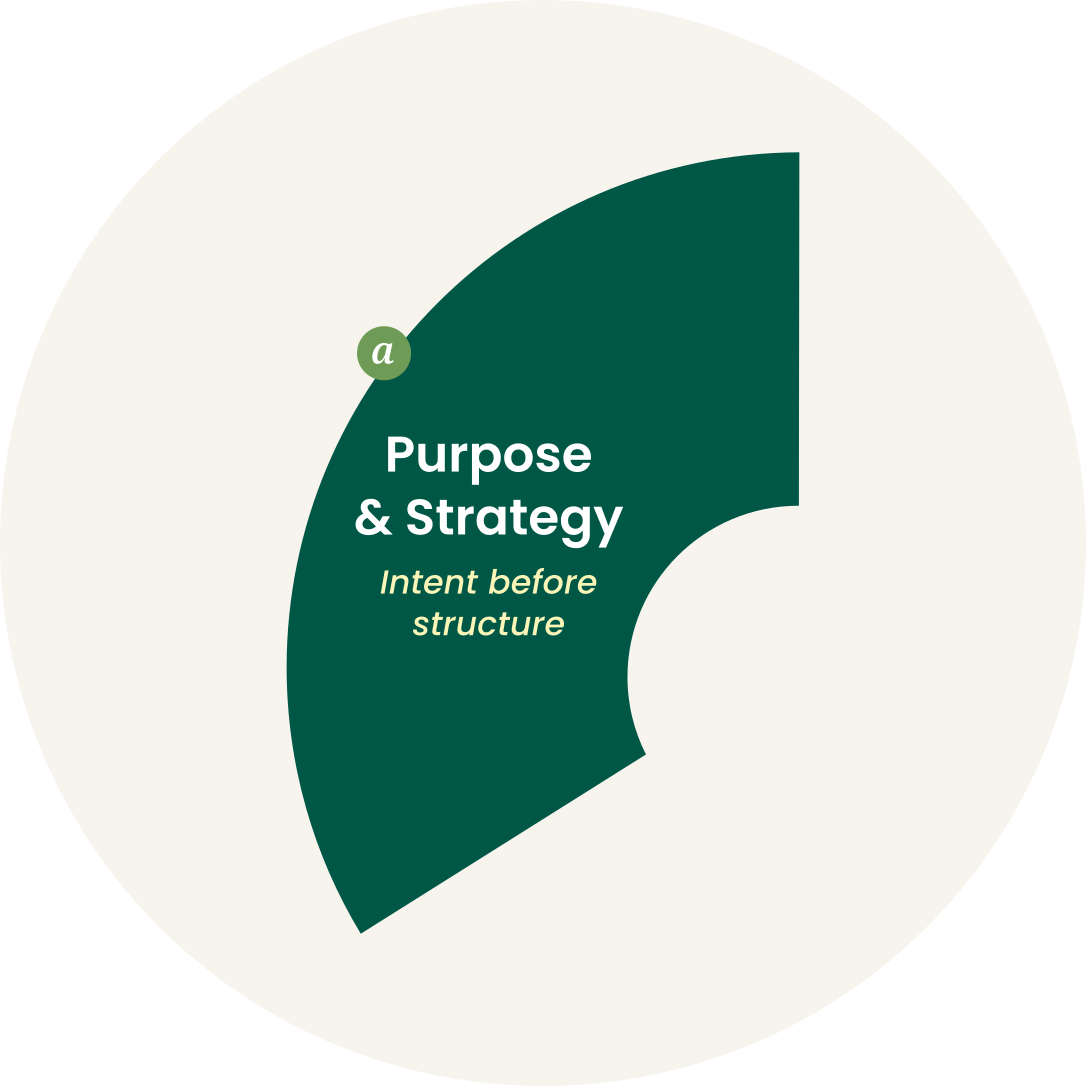
Organizational design begins with clarity about what the organization is working to realize. We connect purpose and strategy to the choices that follow, creating a clear foundation for the organization’s structure, roles, governance, and ways of working.
This keeps design anchored in business intent rather than beginning with an org chart or reporting relationship.
MODEL LEVEL
Structure & Roles
Create clarity around decisions and leadership
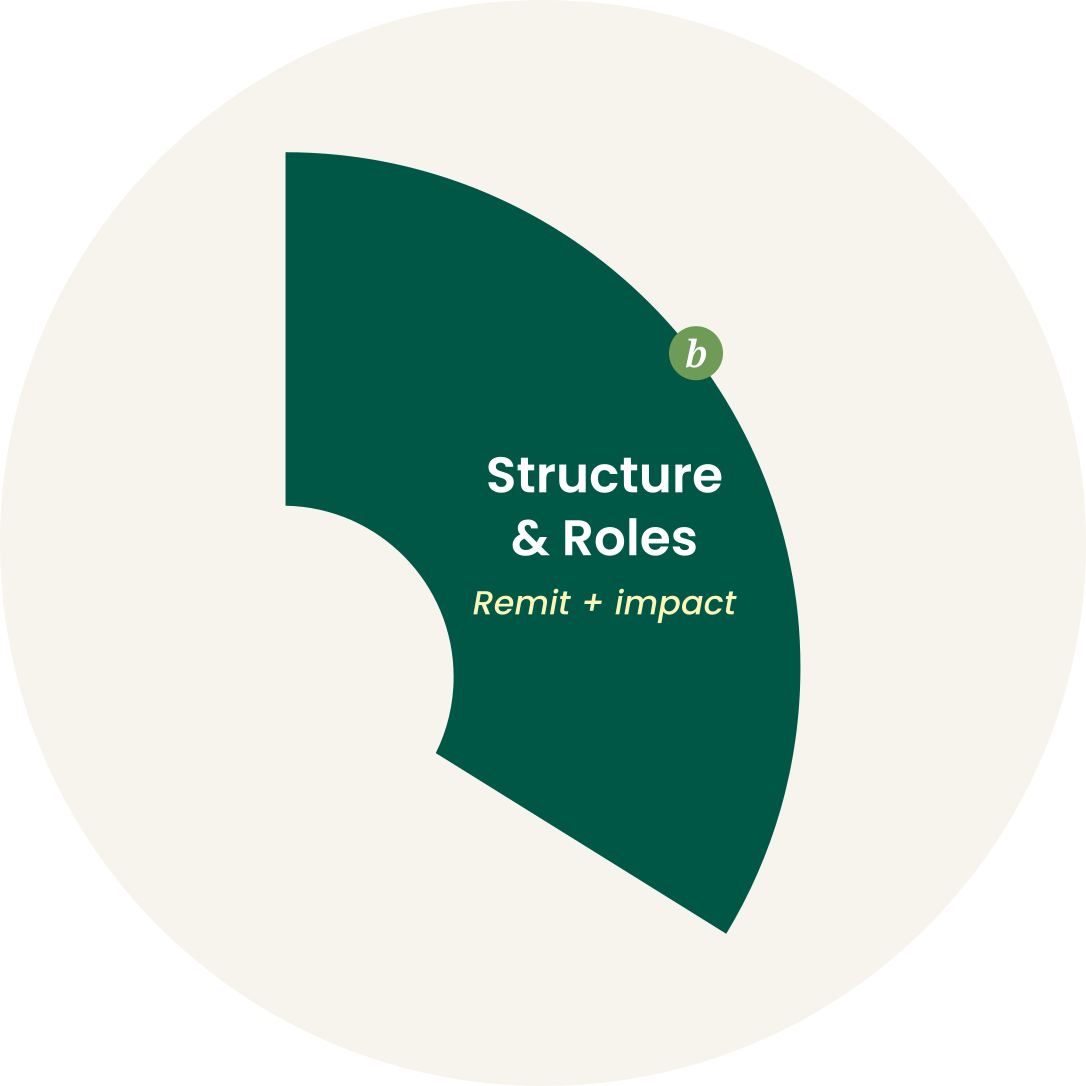
Structure determines where work sits, while roles clarify how people contribute to it. We consider reporting relationships, remit, accountabilities, connections, and how work moves across the organization.
The intent is not simply to define positions. It is to create greater clarity around how people contribute, collaborate, and make the organizational design usable in practice.
MODEL LEVEL
Governance & Leadership
Create clarity around decisions and leadership
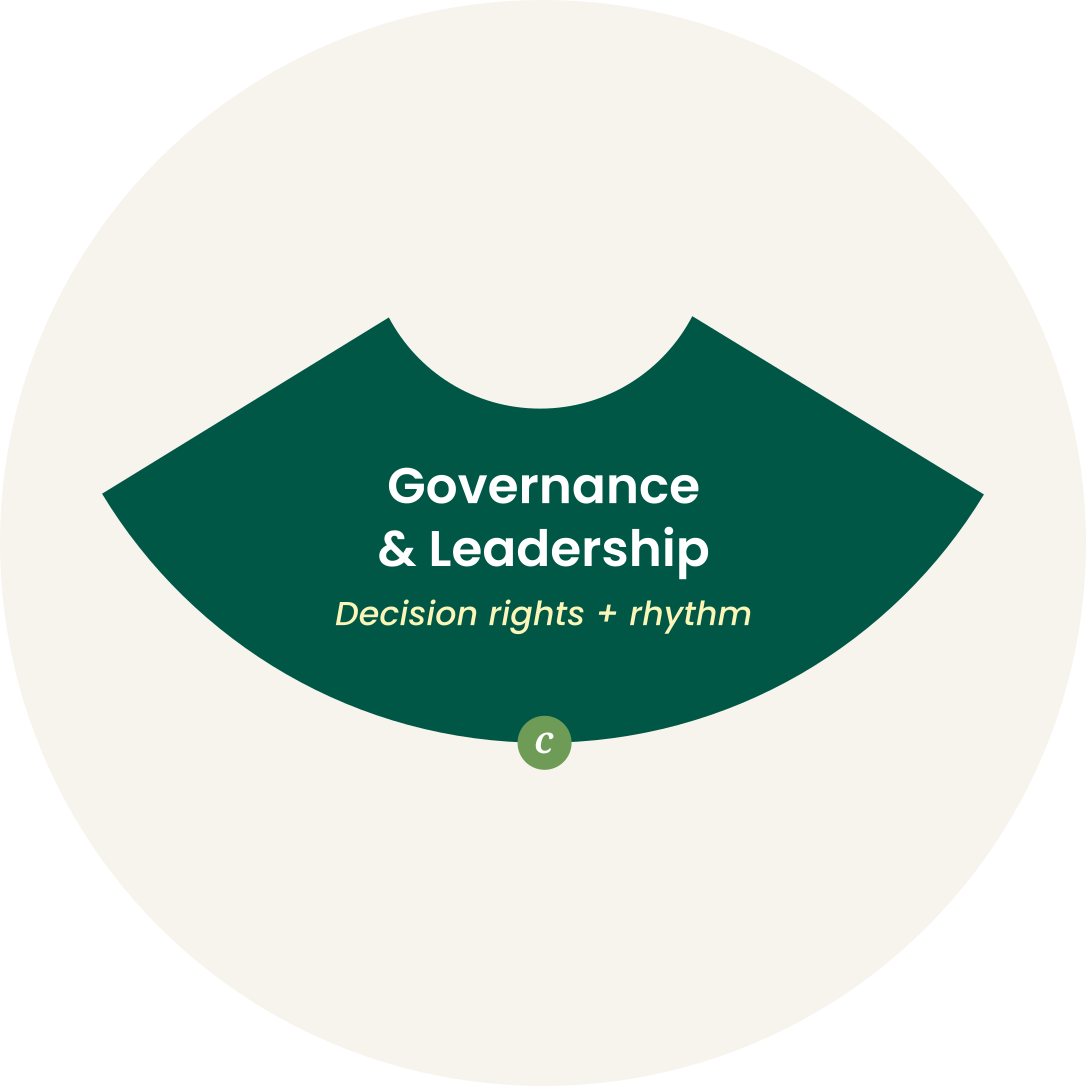
Governance and leadership bring the structure to life. We establish decision rights, leadership expectations, meeting rhythms, and the mechanisms through which direction, accountability, and coordination are held.
These choices help people understand where decisions sit, how they are made, and what leaders must consistently hold as the organization evolves.
MODEL LEVEL
AI as a Design Condition
Design intentionally for human and AI contribution
AI is changing how work is completed, how decisions are supported, and how roles are defined. It is therefore not an addition to consider after the organization has been designed; it is a present design condition.
We help leaders consider where AI can contribute, where human judgment remains essential, and how roles, workflows, governance, and accountability may need to evolve around that relationship.
Our How
From our ethos, we help create the conditions for a way of working that carries across all our frameworks.
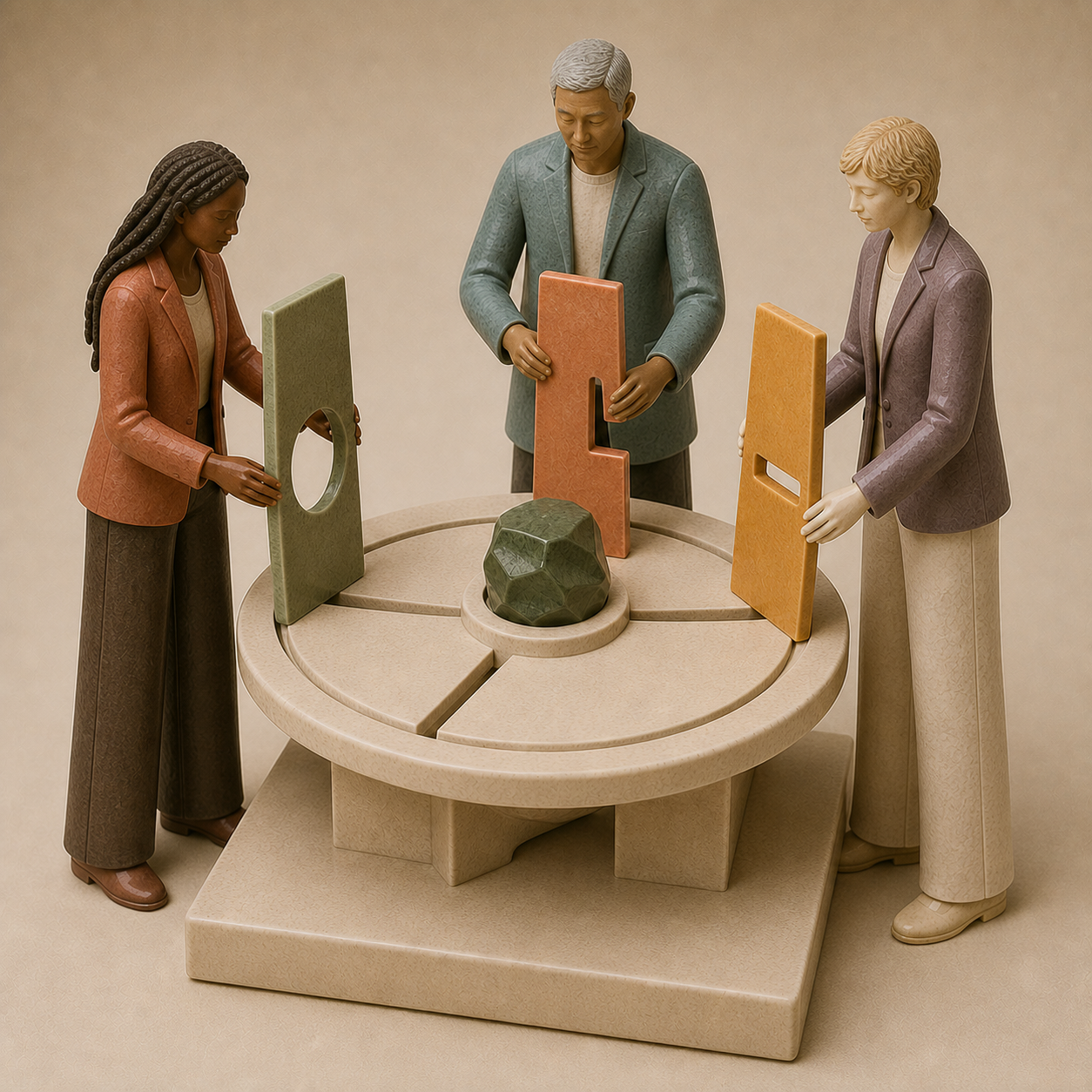
Context Defines Meaning
Context shapes the why, who, and what of a situation, and how it is experienced by each person.
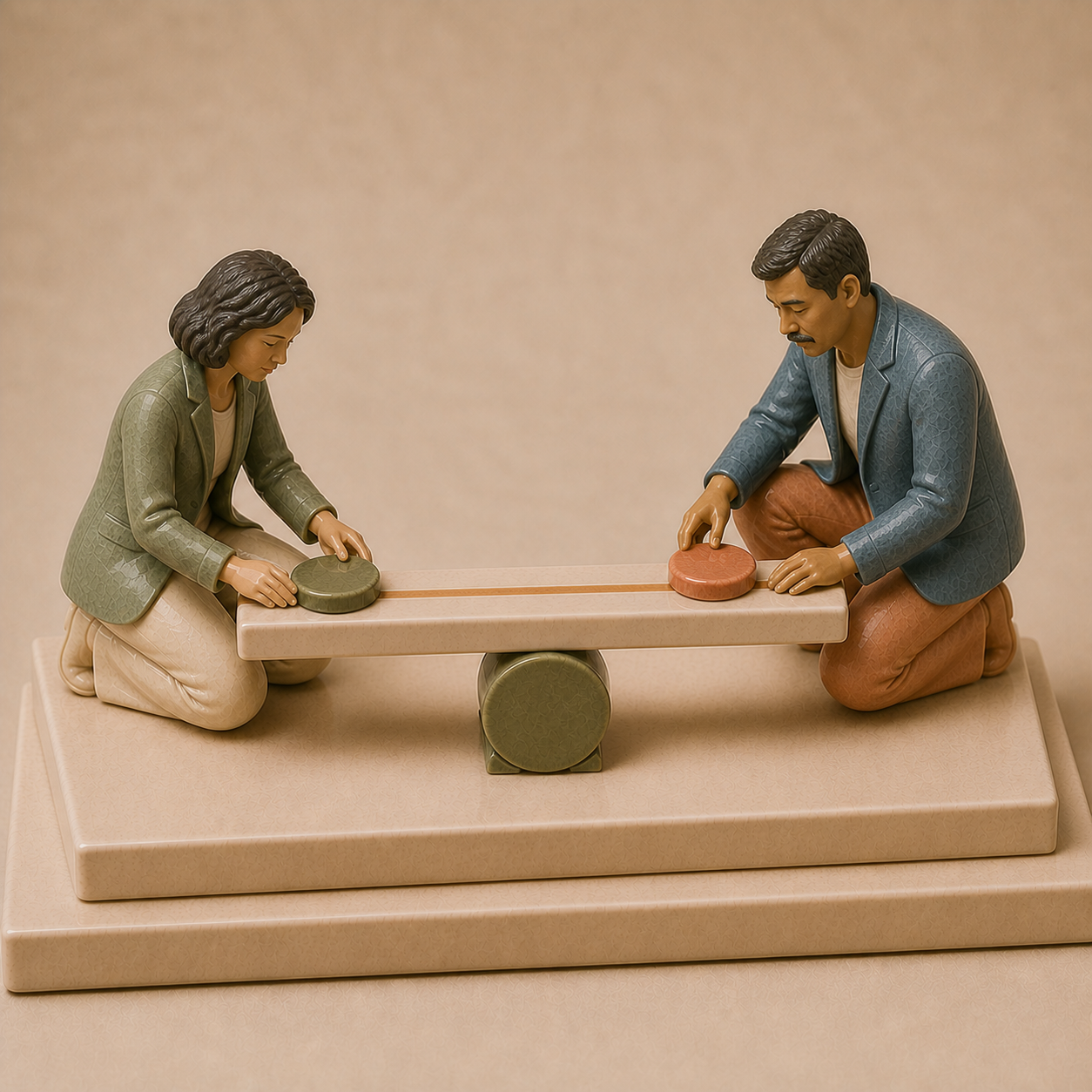
Nothing Imposed Works
Meaningful change happens through trust, relationship, and shared understanding.
We Do Nothing Alone
Interdependence is at the core of co-creation, connection, and how we work with others.
Small Things Are Big Things
How we show up in each interaction shapes the experience and the impact it creates.
What's Needed Emerges
By listening closely and staying flexible, what is needed becomes clearer over time.
Phase One
Design
Connect strategy to organizational design
Design begins by clarifying what the organization is working to realize and what its strategy requires. From there, we shape the interconnected elements of purpose, structure, roles, governance, leadership, and decision rights, including where human judgment and AI belong.
The intent is not to create a static structure. It is to establish a design that can be tested against its original purpose and thoughtfully evolved as the organization learns.
Phase Two
Impact
Understand what the design sets in motion
As the design takes shape, its implications become clearer. We examine its impact across three connected dimensions: financial choices, processes and workflows, and the experience and capabilities of the team.
This brings visibility to costs, investment decisions, handoffs, decision paths, role shifts, and new ways of working. Considering these areas together helps leaders understand how each design choice will affect the organization as a whole.
Phase Three
Implement
Bring the design into everyday work
Implementation is where organizational design becomes understood, experienced, and lived. We support this through three connected activities: socializing the design and its intent, building understanding and capability, and activating it through roles, rhythms, and day-to-day work.
This extends beyond an announcement or one-time training session. It requires time, continued leadership attention, and an openness to revisit the design as people begin working within it.