Feedback in the Context of
Generative Relationships
Relational, embedded, intentional, and strategic
What is How We Hold?
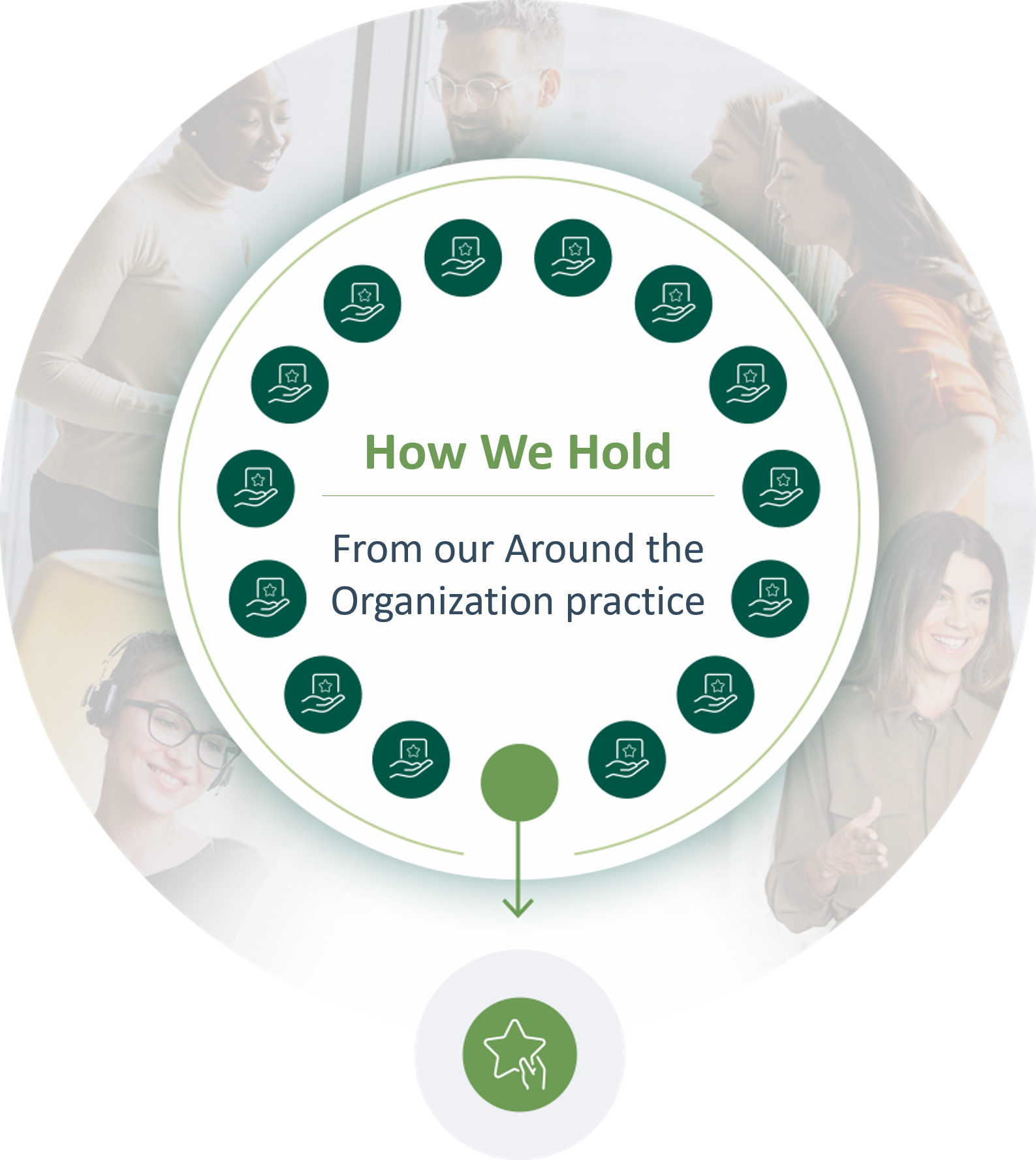
“How We Hold” is a collection of creative pieces from our Around the Organization practice. Each piece reflects our approach to shaping leadership and organizational capability—designed to support deeper understanding and forward movement in both thinking and action.
How We Hold
Relational, embedded, intentional, and strategic
Feedback is often channeled through formal cycles—annual reviews, structured surveys, or scheduled check-ins, that can feel disconnected from the dynamics, ways of working, and relating happening between team members.
How We Hold Partner Feedback reframes input as a relational and embedded experience. It arises from mutual understanding about how we’re working together—surfacing in moments of tension or breakthrough, and living in the everyday exchanges that build trust over time.
When teams practice holding feedback with intention and care, grounded not in critique, but in mutual respect, they create conditions where individual awareness and collective understanding can grow. This makes feedback not only meaningful, but also strategic.
The following pages offer a closer look at how this generative feedback practice can be implemented within your team's current collaboration patterns and organizational objectives.
How We Hold Feedback in the context of Generative Relationships
Relational, embedded, intentional, and strategic
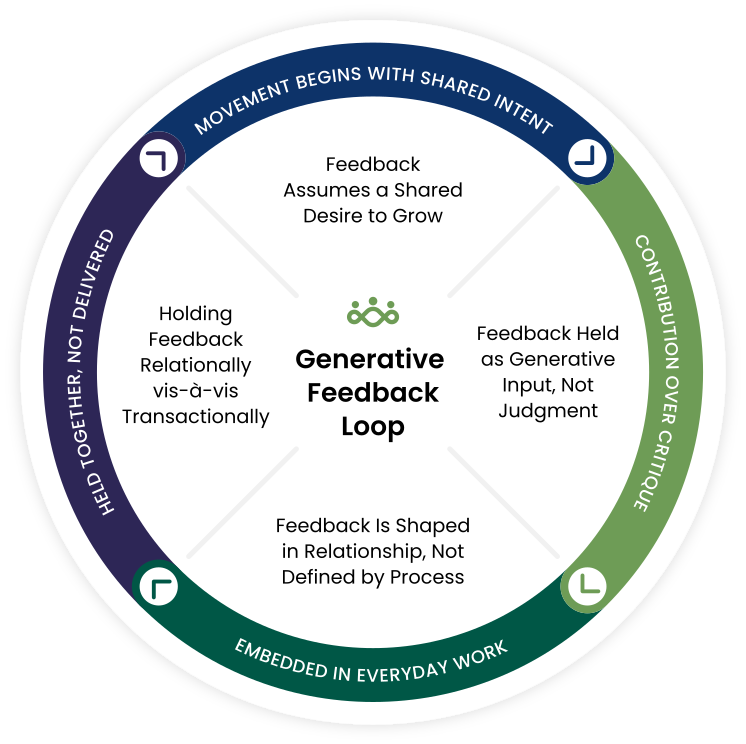
At Nikoleta & Associates, we hold feedback as a shared, generative practice — embedded in how we relate, align, and move forward together. It’s not a one-time event, but a living part of the relationship, shaped by stated and mutual intent and experienced in the everyday rhythm.
Our approach is grounded in mutual respect and shared purpose, with feedback seen not as data alone, but as a relational signal that supports individual and collective relationship growth.
This practice strengthens real-time teaming, adaptive leadership, and cross-functional flow — without relying solely on tools like surveys or formal reviews.
Feedback is shared, not delivered — it starts with sharing your own experience.
Feedback is shared, not delivered — it starts with sharing your own experience.
Reframes feedback as a relational offer — grounded in care, not critique.
Feedback lives in daily rhythm — not just formal events.
HOW WE HOLD FEEDBACK IN THE CONTEXT OF
GENERATIVE RELATIONSHIPS
The Feedback Experience —Structured Tools & Embedded Practices
Point in Time, Cultivation, Intentionality.
Healthy organizations recognize that feedback reflects a continuum in relationships —formal tools and real time, in-the-moment exchanges. One is not better than the other; each plays a role. What matters is how intentionally they’re held, and whether they reflect trust, clarity, and connection.
Organizational surveys
(e.g., EP Evo, engagement)
Moment-in-meeting reflections
Performance review processes + frames
Pause Points +
real time checks ins
Formal debriefs
or retrospectives
Micro-adjustments in shared work
Coaching intake
and feedback forms
Double-clicks in tension + exciting moments to understand
Dashboards and metrics
Find a way to express Intangibles to guide strategic alignment
Structured tools help scale — but they don’t always build connection.
Embedded practices reflect relational habits — but can be harder to track.
The way feedback is used, not just where it’s placed, tells us everything about how the organization holds growth.
HOW WE HOLD FEEDBACK IN THE CONTEXT OF
GENERATIVE RELATIONSHIPS
What It Takes — Capabilities That Make Feedback Relational
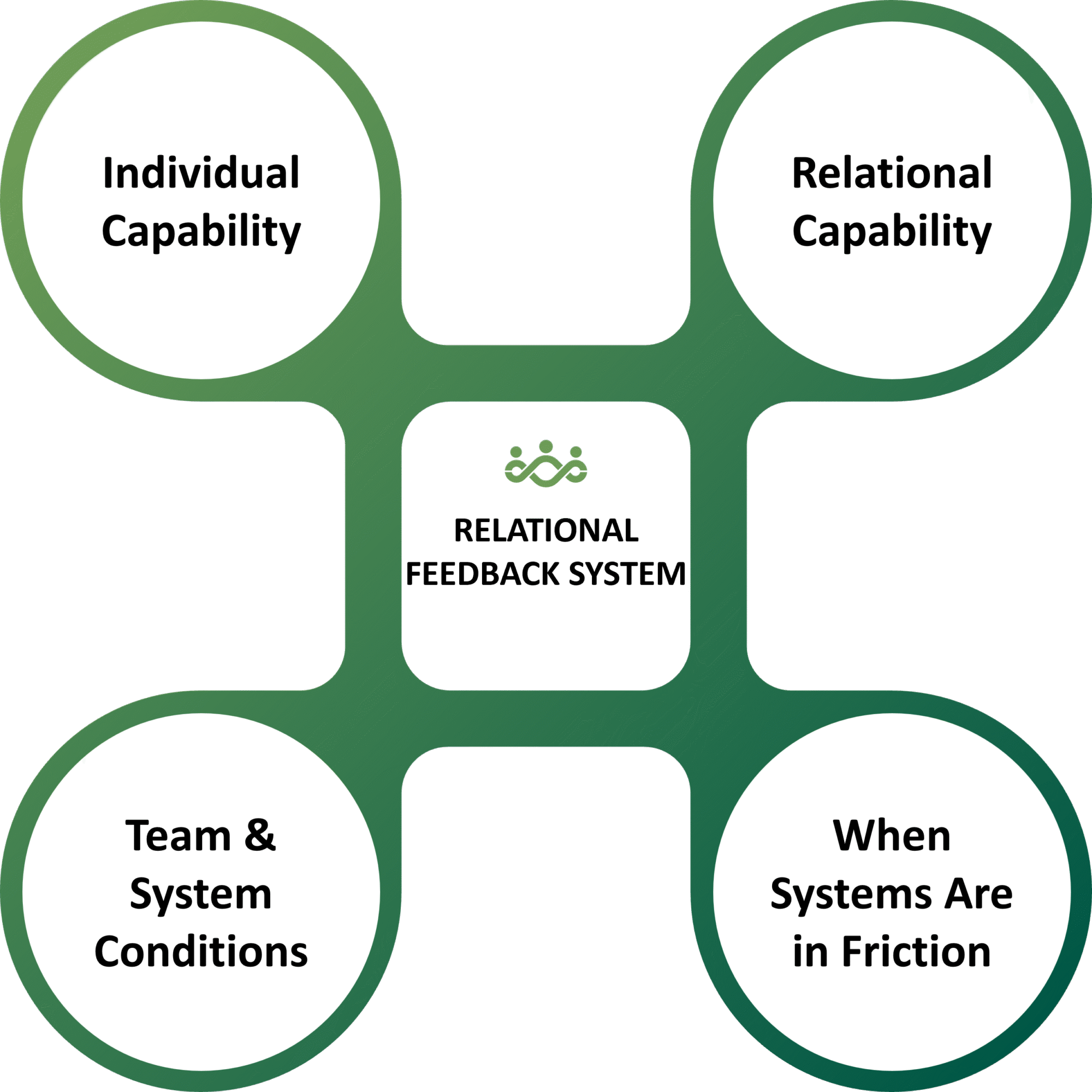
Relational Feedback Requires Leadership Capability — Across Individuals, Teams, and Systems
Relational feedback doesn’t just “happen.” It’s built — through capabilities that span individual awareness, team dynamics, and system conditions. When feedback flows, it’s not just because of good intent — it’s because people and structures know how to hold it well.
Self-awareness, curiosity, courage, and desire to grow
Holding feedback in tension, mutuality, and shared care
Structures, horizontal clarity, role definition, shared movement
Tine to explore — detachment, reactivity, or mislabeling are signals
The Outcomes are in the Experience
When feedback flows, it’s because people, teams, and systems know how to hold complexity together, not just deliver opinions apart.
Applying How We Hold Feedback for a Canadian Retailer
Considerations for a Shared Generative Practice
Three Consideration Areas
1
Relational vis-à-vis Transactional
Framing feedback as mutual discovery aligns with the retailer’s values of partnership and presence.
In the context of Enterprise Planning teams’ key partners, where are we on the relational and transactional continuum?
2
Embedded in Team Rhythms
Starting with us as a team, where are we on this?
What signals are we tapped into, and what areas may we not be?
3
Co-created, Not Extracted
In the context of our shared “problems to solve” together with our partners, are we lifting organization feedback?
Founded in 2013, Nikoleta & Associates is a female-owned boutique consultancy working at the intersection of strategy, reinvention, and innovation, while holding the human experience in business at its core.
Meet the team that collaborates with leaders and teams—creating conditions for strategy, reinvention, and innovation to come to life through highly contextual programs tailored to your unique context.