



Organizational design does not become useful because a structure has been drawn, a reporting line has shifted, or a future-state chart has been approved. It becomes useful when strategic intent is translated into choices people can understand, govern, and work through.
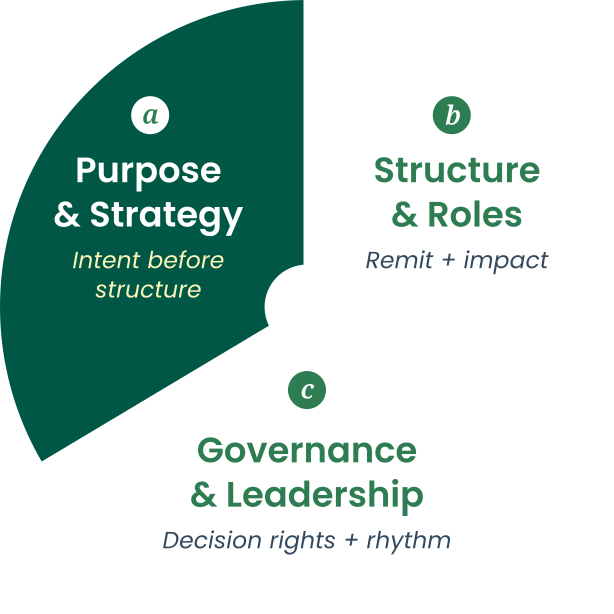
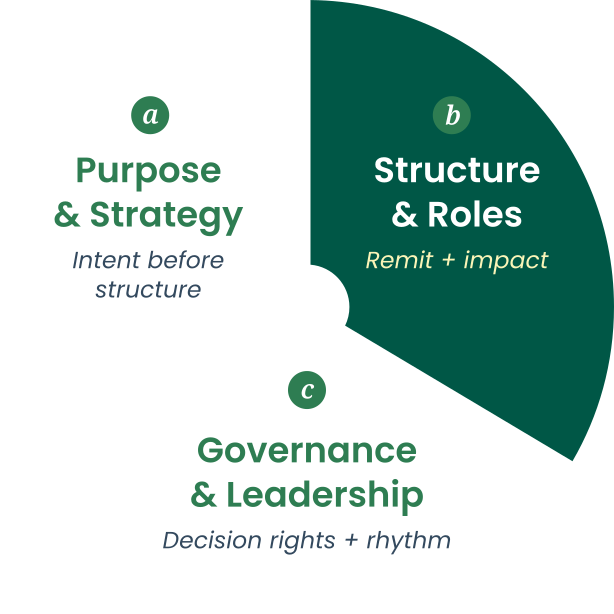
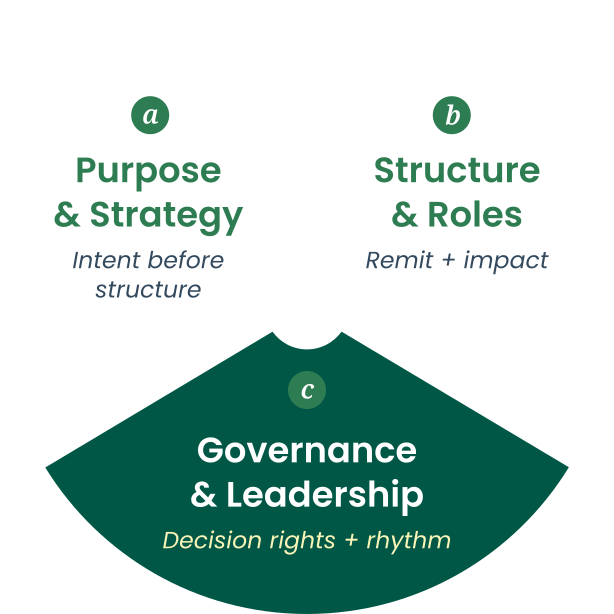
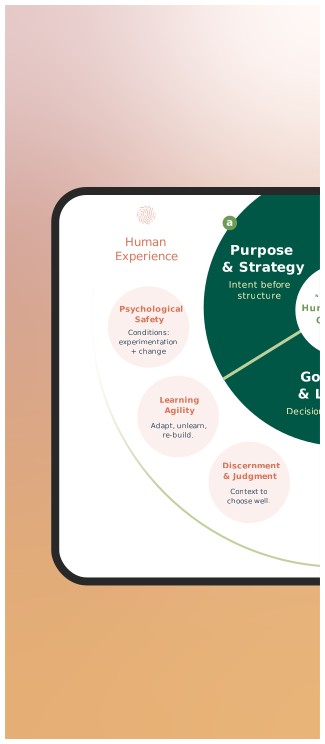
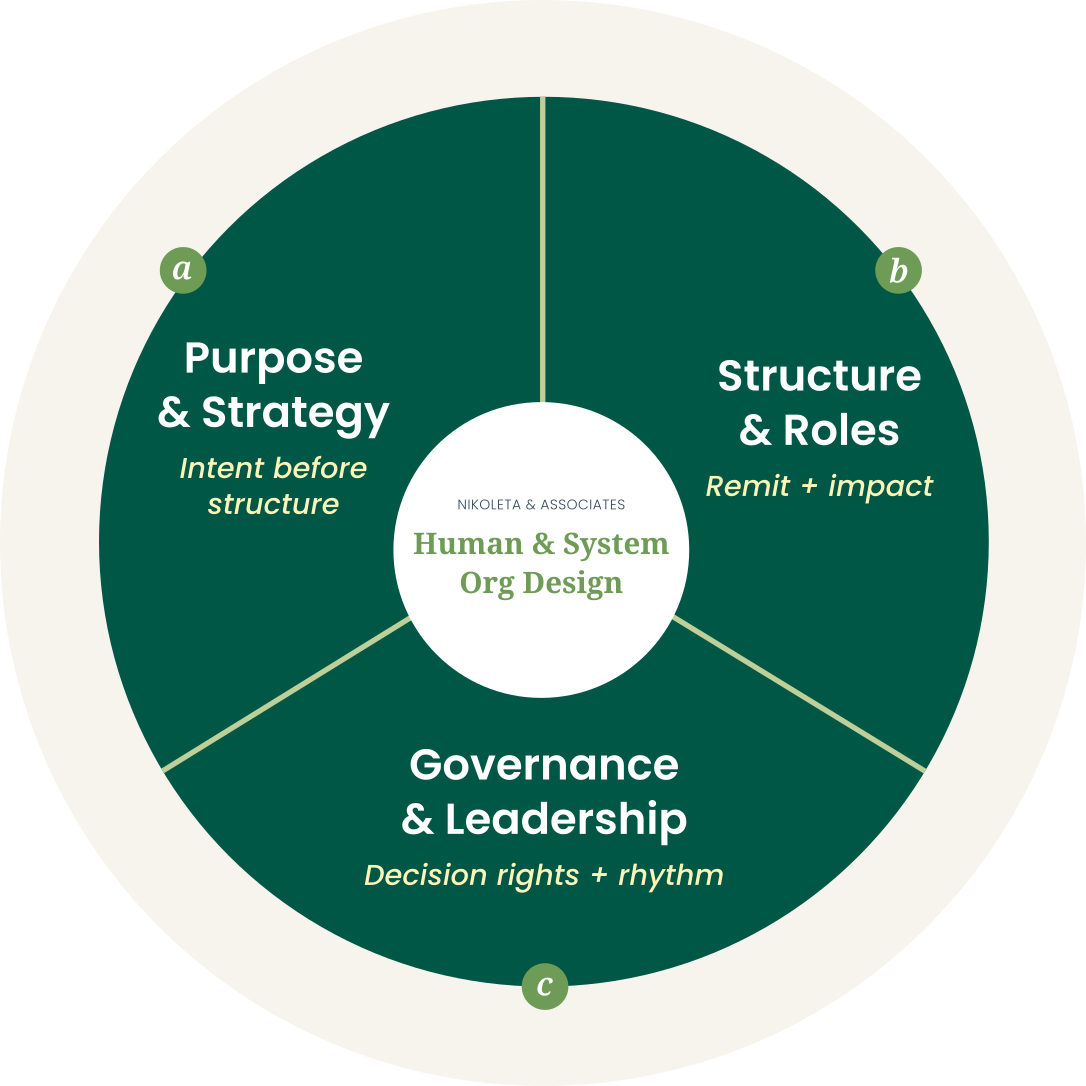
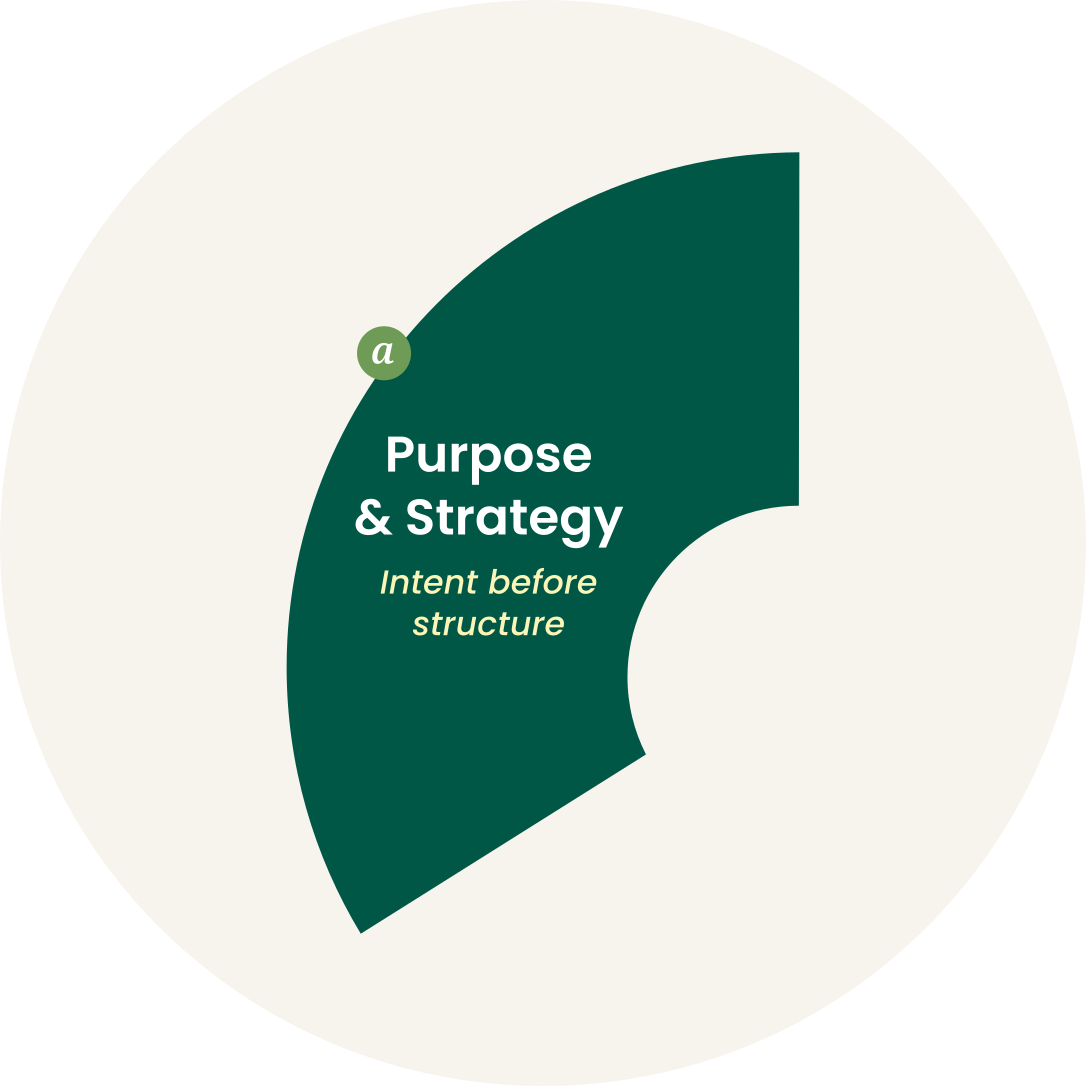
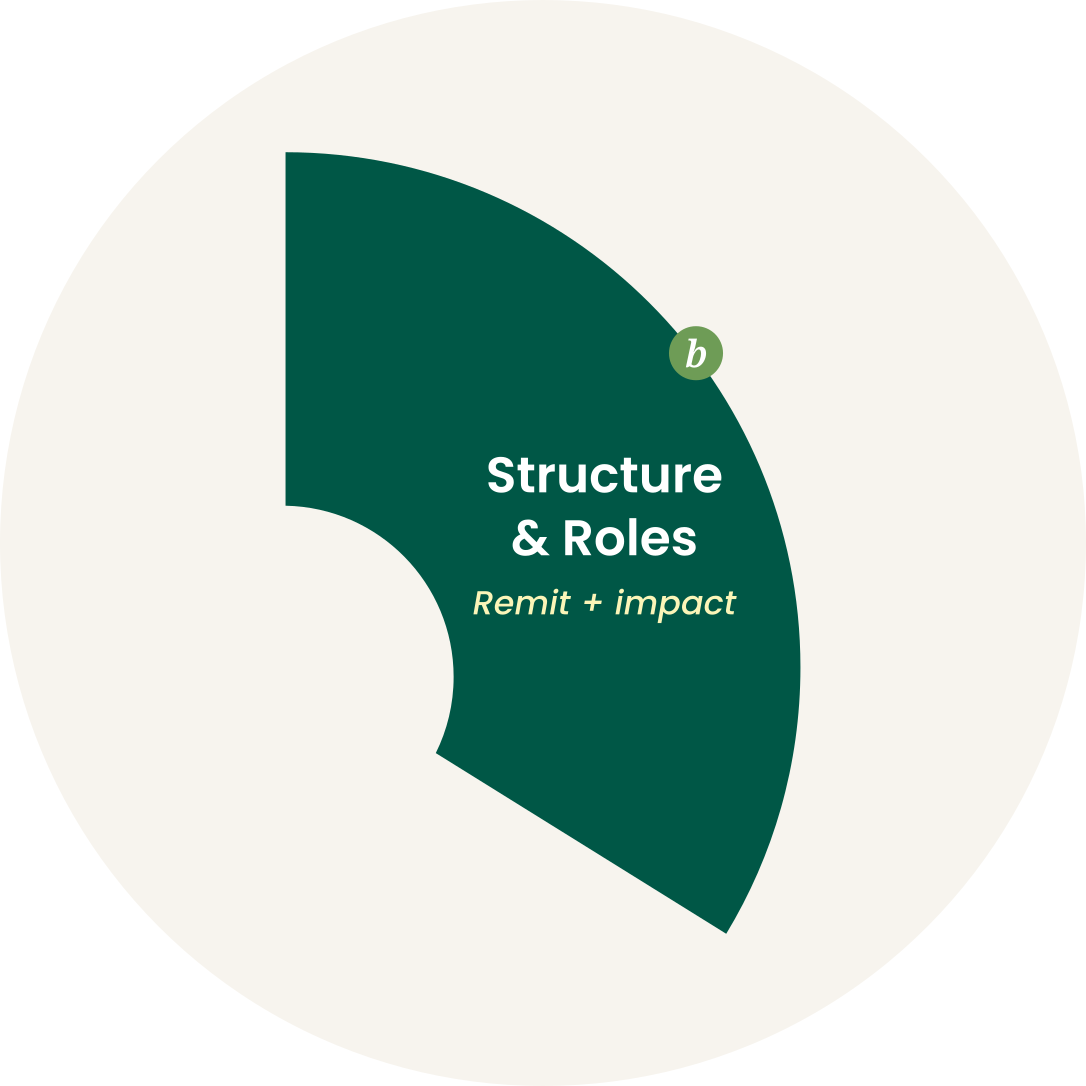
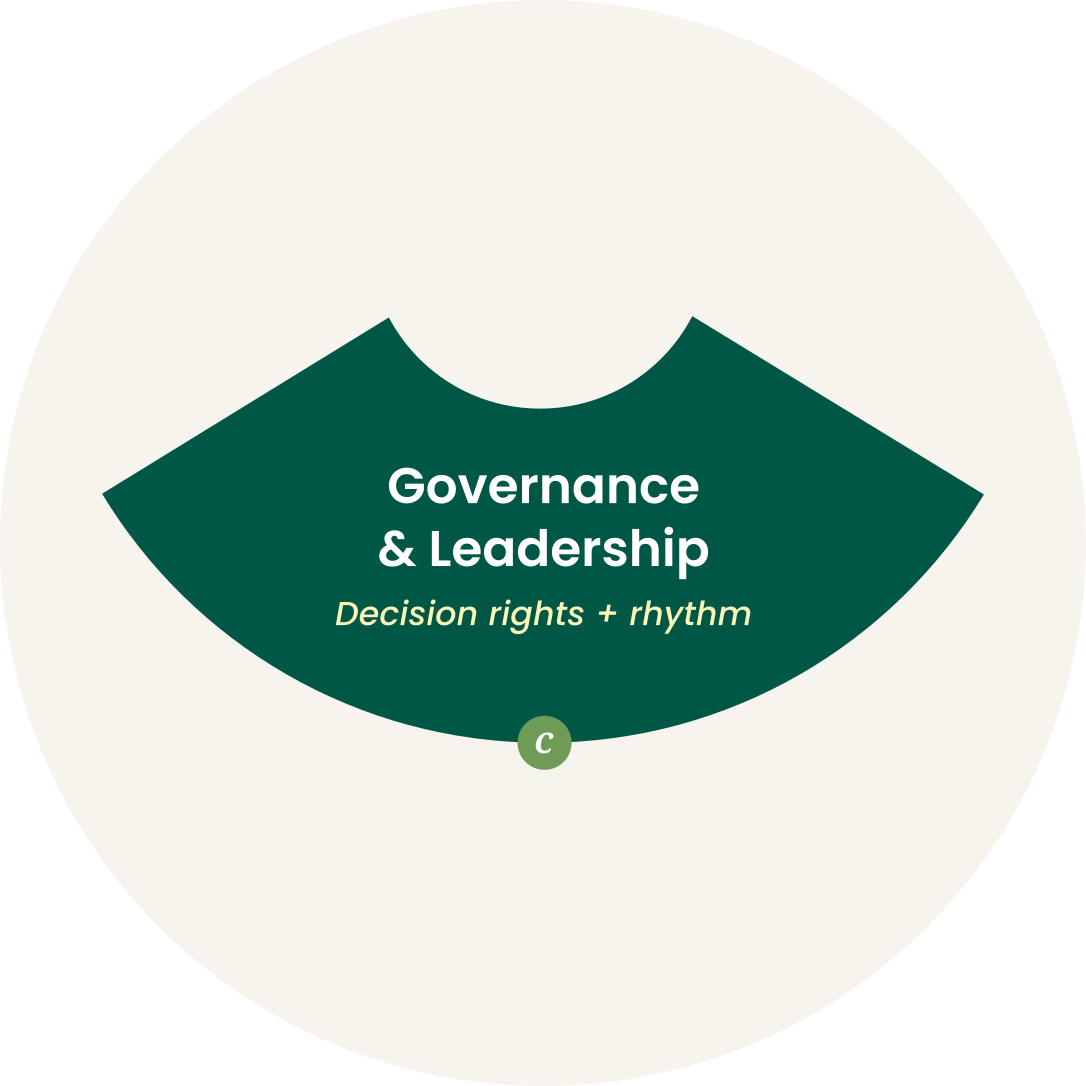
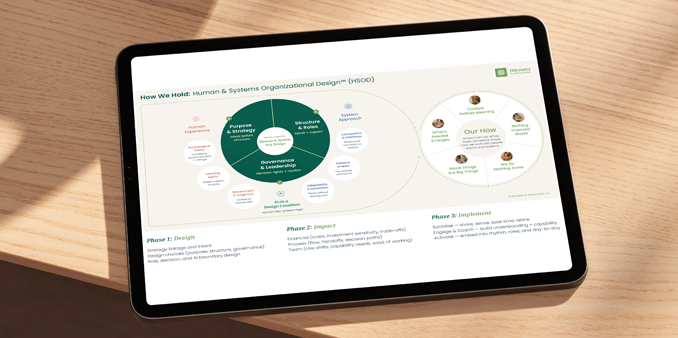
This is the work expressed in the Human & Systems Organizational Design™ model. It begins with a formal spine: Purpose & Strategy, Structure & Roles, and Governance & Leadership.
Purpose & Strategy anchors what the organization is here to realize. Structure & Roles clarifies where work sits, how contribution is defined, and how accountabilities connect. Governance & Leadership gives the design its decision pathways, leadership rhythms, and ways of holding direction over time.
This matters because design often breaks down when it is treated as an org chart exercise. The boxes may be clear, but the human and system conditions may not yet support how work actually moves, how decisions are made, or how people experience the change.
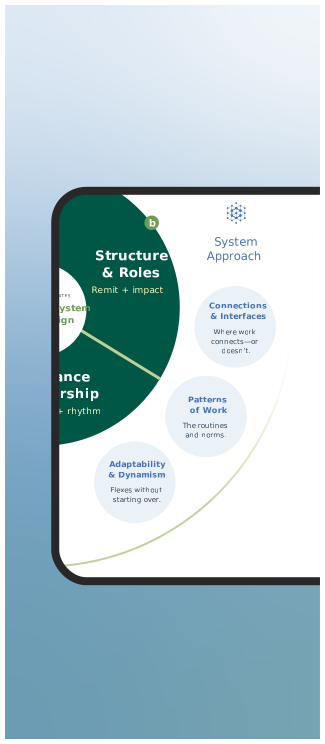
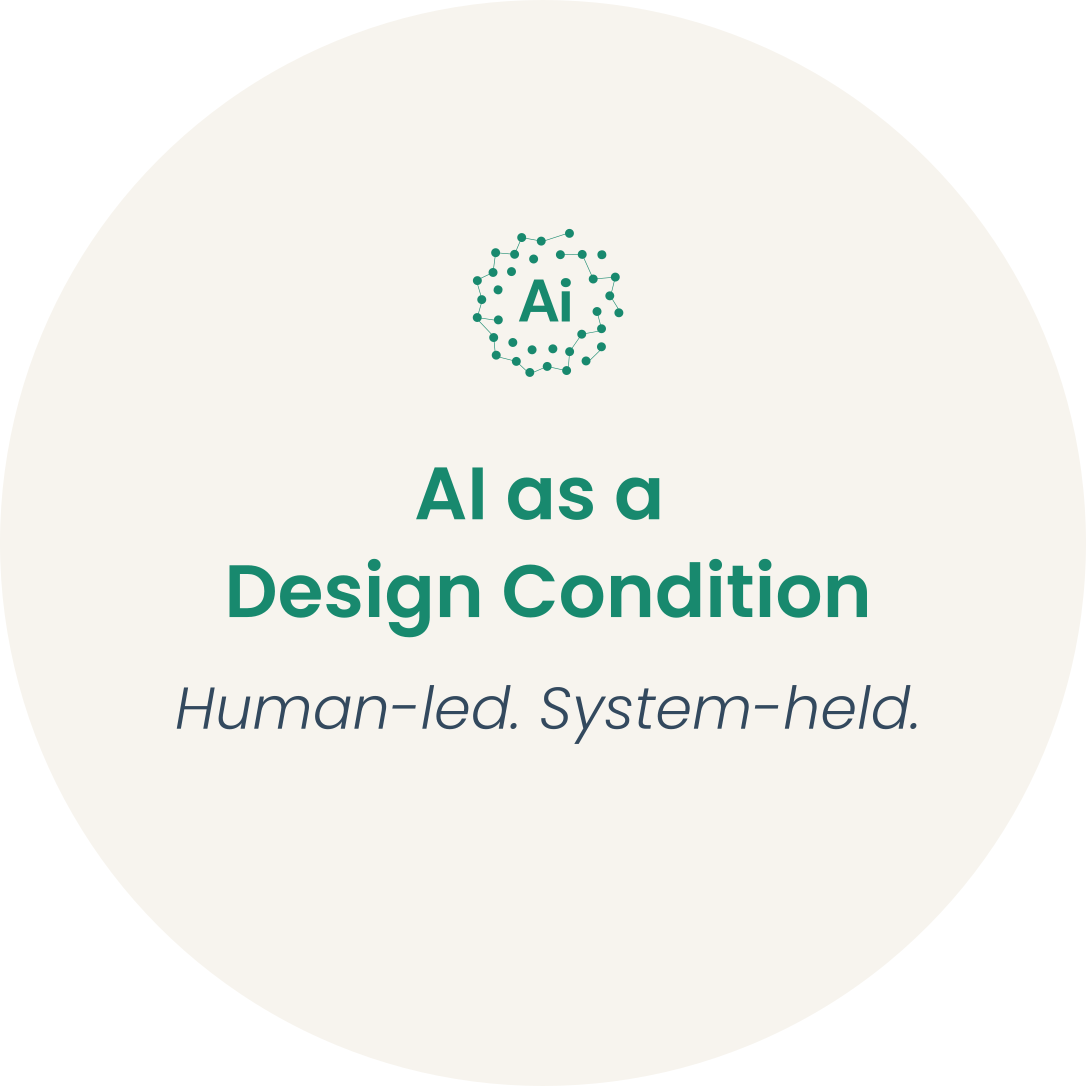
It is also why the model does not stop at structure. Human Experience, Systems Approach, and AI as a Design Condition are not add-ons. They are part of the design itself.
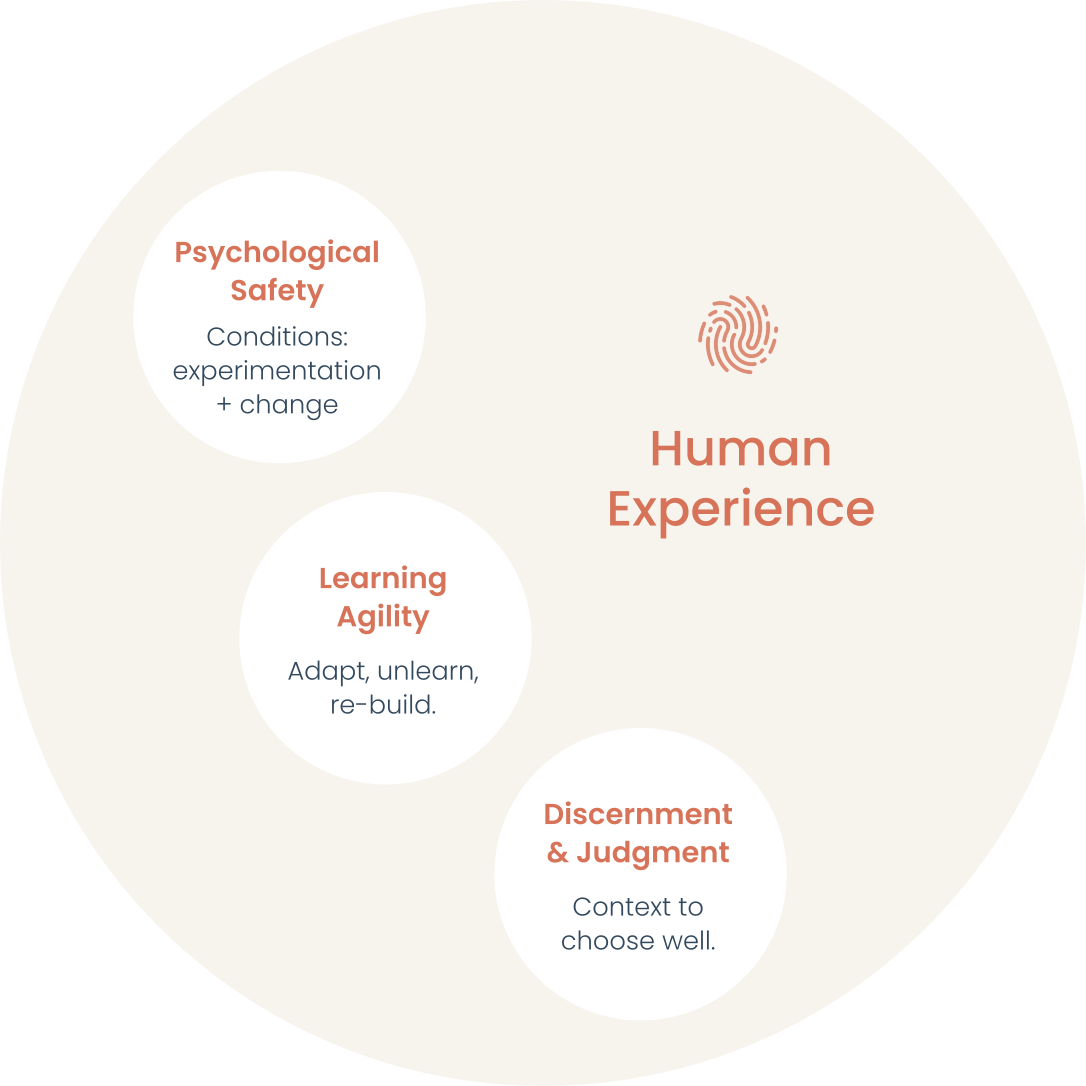
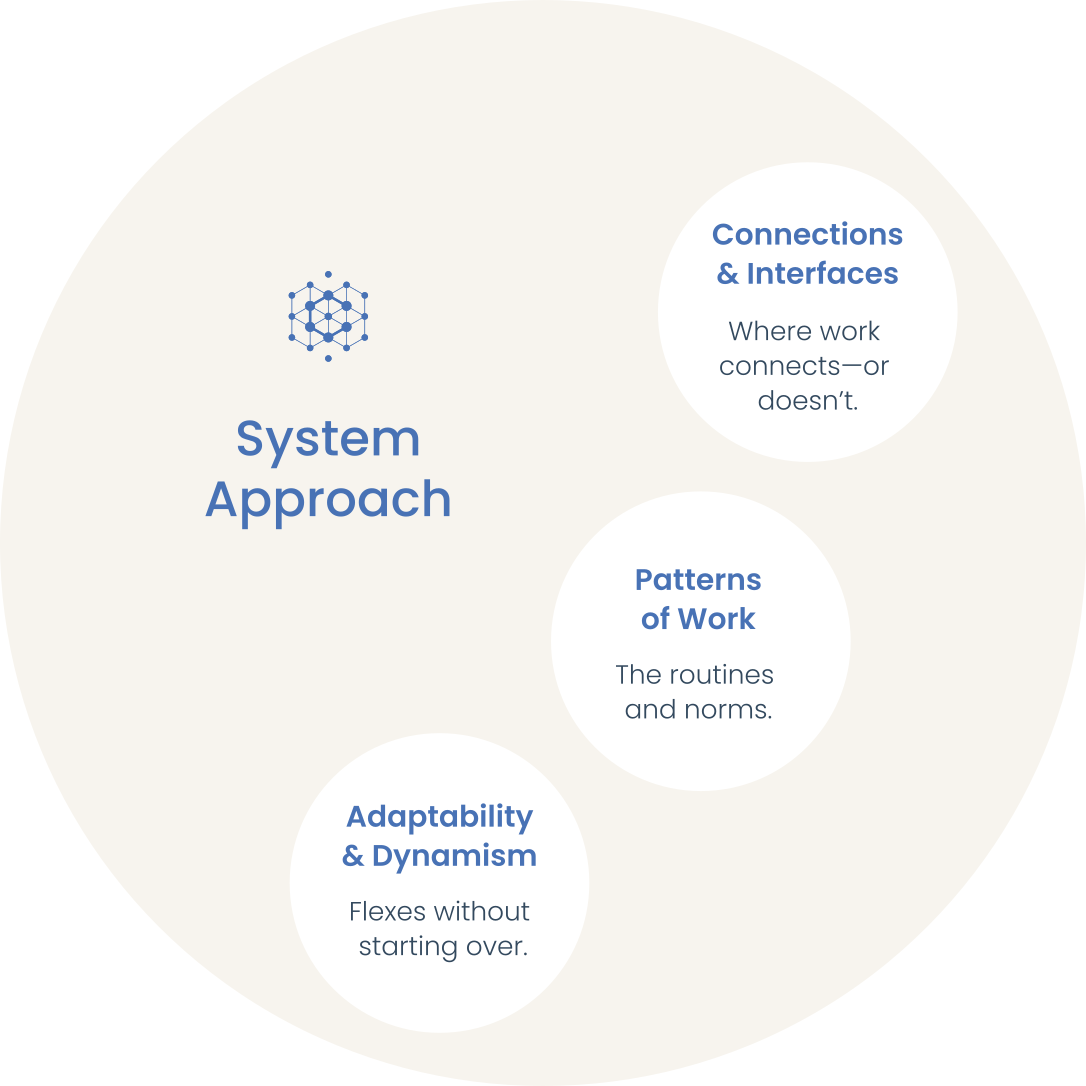
Human Experience asks whether the design can be inhabited: whether people have clarity, agency, safety, and capacity to move with the change. Systems Approach looks at the wider operating environment: how information, tools, incentives, routines, and dependencies shape what the structure can actually do.
AI as a Design Condition asks a different kind of question: not simply where technology can automate work, but how human judgment, accountability, workflow, and decision-making need to be redesigned when AI becomes part of the system.
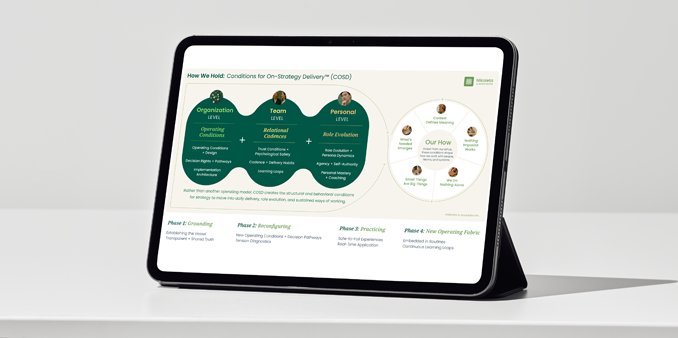
In this frame, organizational design is not only a structural deliverable. It is the practice of making strategy coherent across the organization, the team, and the personal level, so the design can hold business intent and human reality at the same time.