

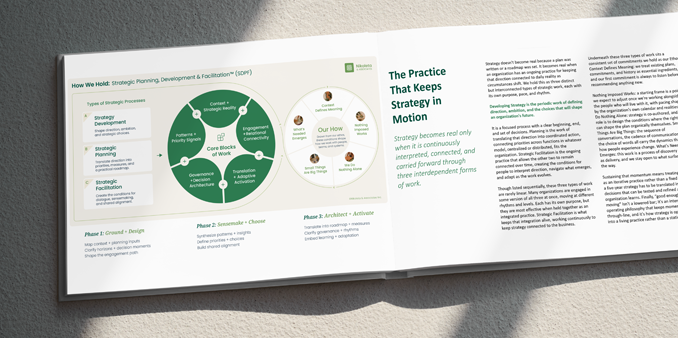
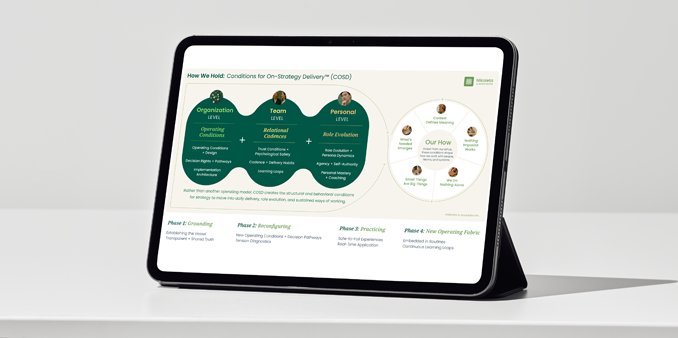


Strategy does not become real because it has been announced, mapped, or tracked. It becomes real when the organization has the conditions to absorb it, work with it, and translate it into daily delivery.
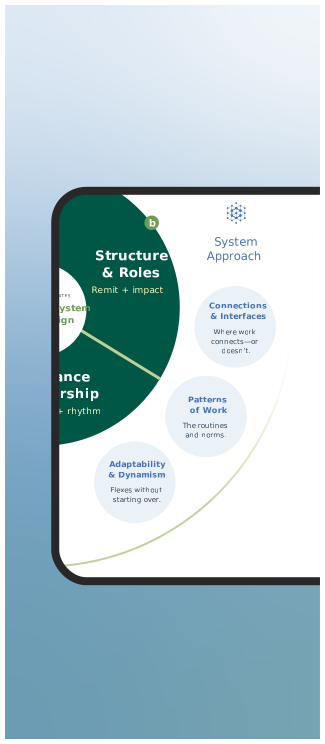
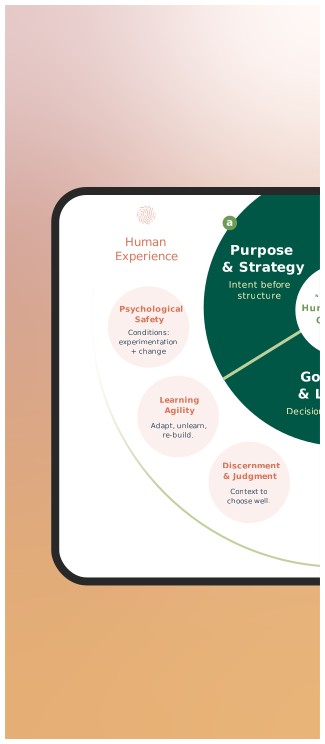
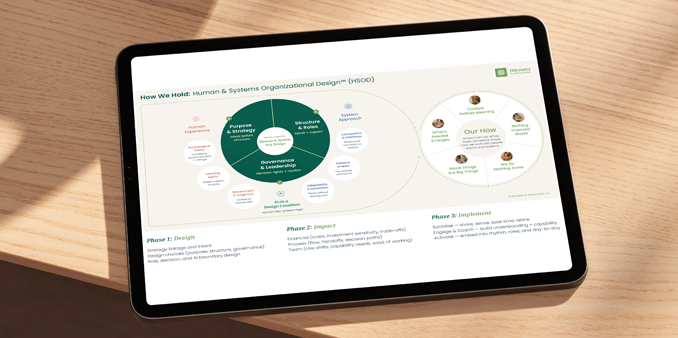
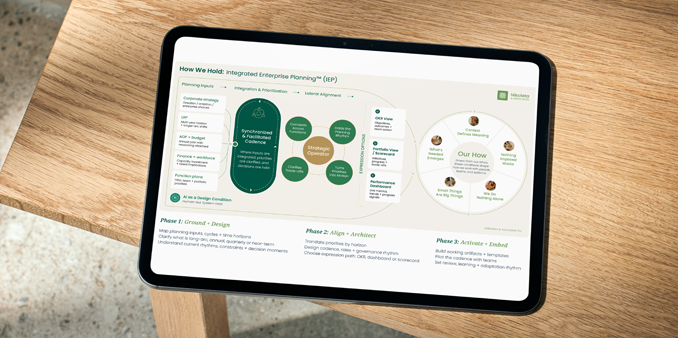
This is the work of Adaptive Delivery & Systemic Grounding that is expressed in the COSD frame. The work holds a deliberate tension.
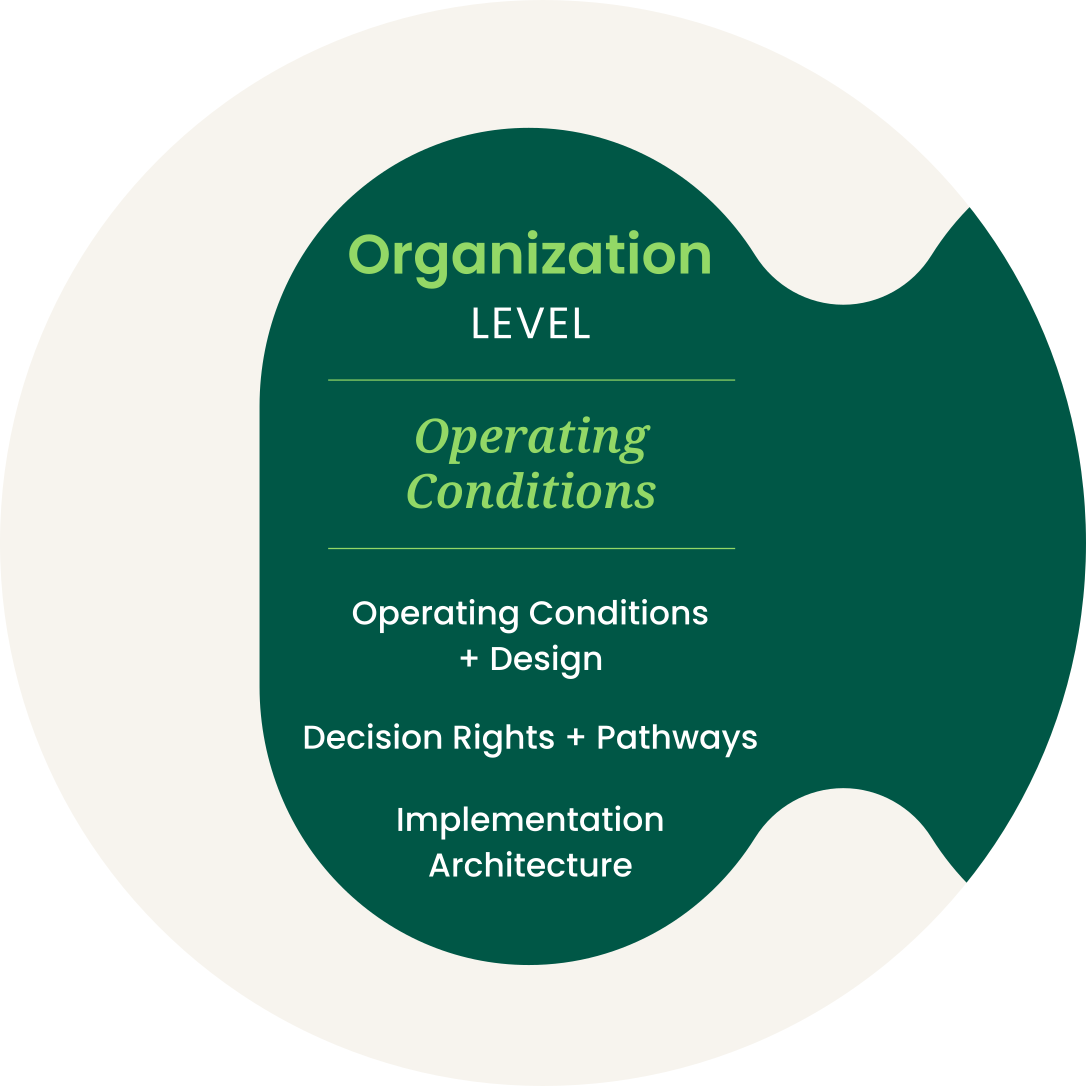
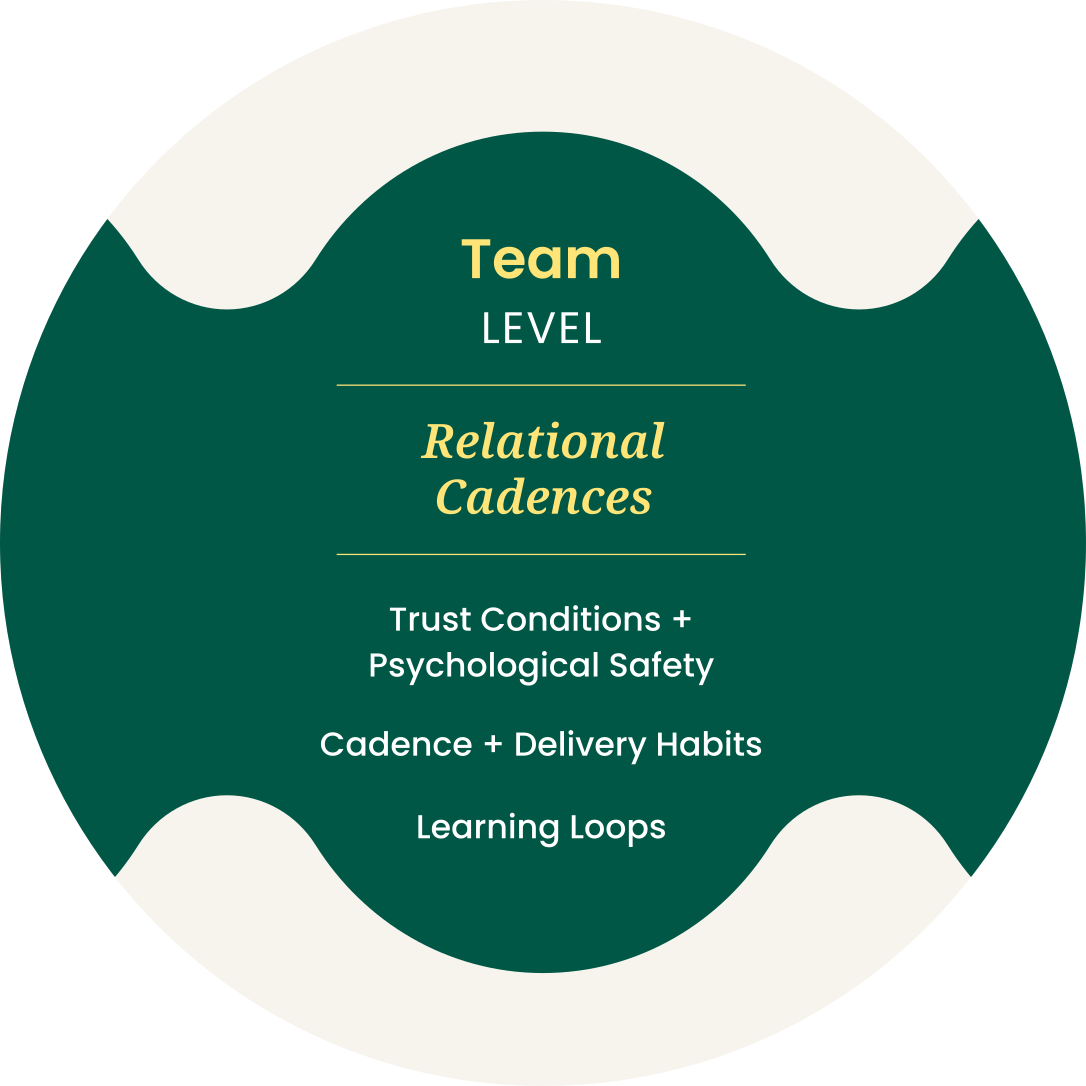
Systemic Grounding creates the structural and psychological base that allows an organization to stay anchored through complexity. It includes operating conditions, decision pathways, trust conditions, relational cadences, and a clear holding environment. Adaptive Delivery creates the movement: the active, iterative behaviours that allow teams and leaders to keep learning, adjusting, and delivering as the work evolves.
This distinction matters because strategy often breaks down in the space between intent and practice. The plan may be clear, but the human system may not yet have the rhythms, role clarity, authority pathways, or relational capacity to carry it.
Without grounding, movement can feel like pressure. Without movement, grounding can become static. On-strategy delivery requires both.
It is also why the language needs to shift. We do not lead with terms like driving execution, change management, resilience, high performance, upskilling, or compliance.
These terms can unintentionally place the burden on individuals, imply “force,” or most importantly reduce complex human-system work to checklists, training plans, or productivity measures. They often describe what organizations want from people, rather than also the conditions people need in order to contribute meaningfully.
Instead, we lean toward language that reflects how strategy is actually metabolized: grounding, anchoring, operating conditions, pathways, role evolution, personal mastery, holding environment, and productive disequilibrium.
These terms help name the deeper work: creating enough stability for people to stay connected to purpose, and enough movement for the organization to keep learning, adapting, and delivering.
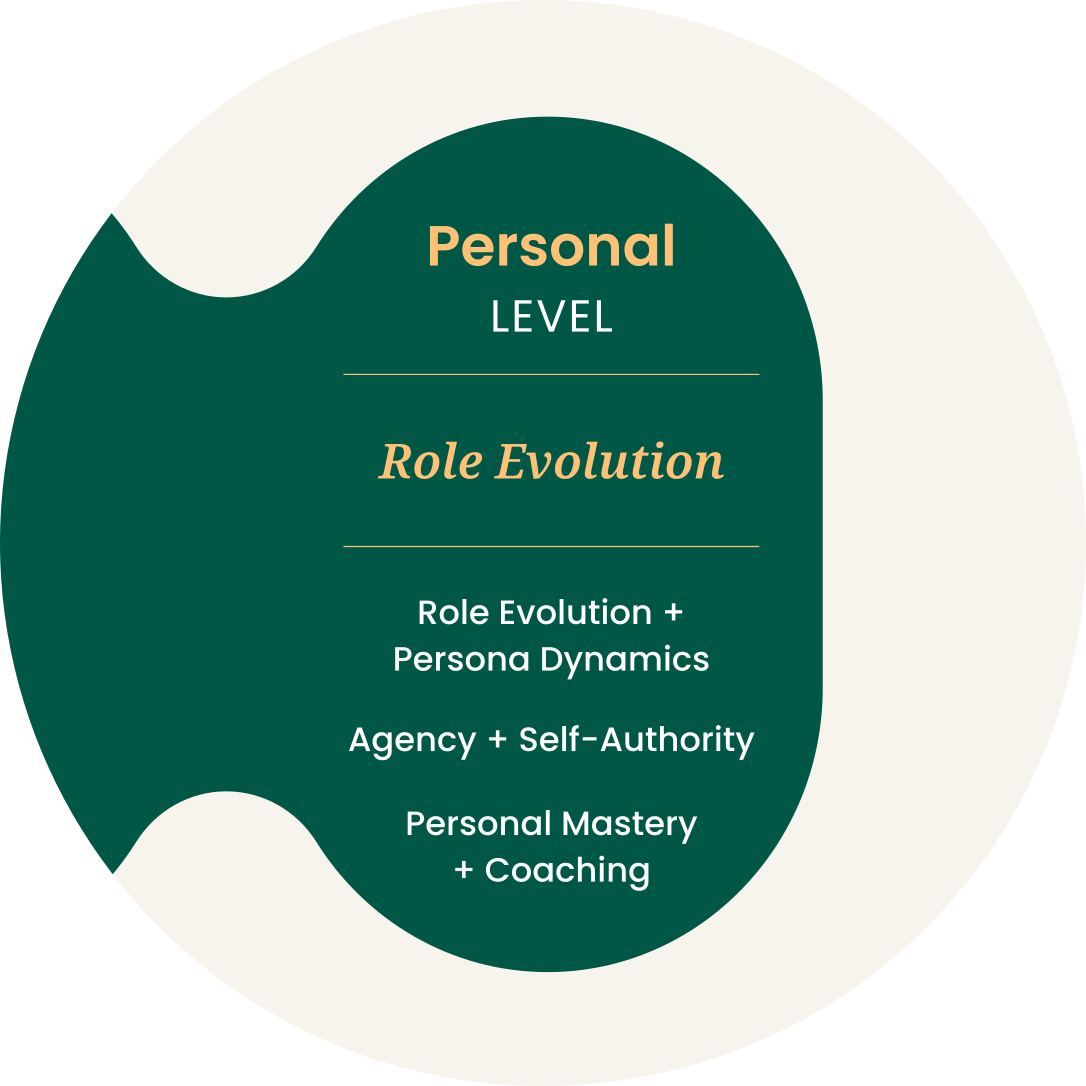
In this frame, delivery is not just traditionally framed as “execution.” It is the lived practice of strategy across the organization, the team, and the personal level. It is how high-level direction becomes daily behaviour, how roles evolve with the work, and how the organization builds the capacity to move without losing its centre.