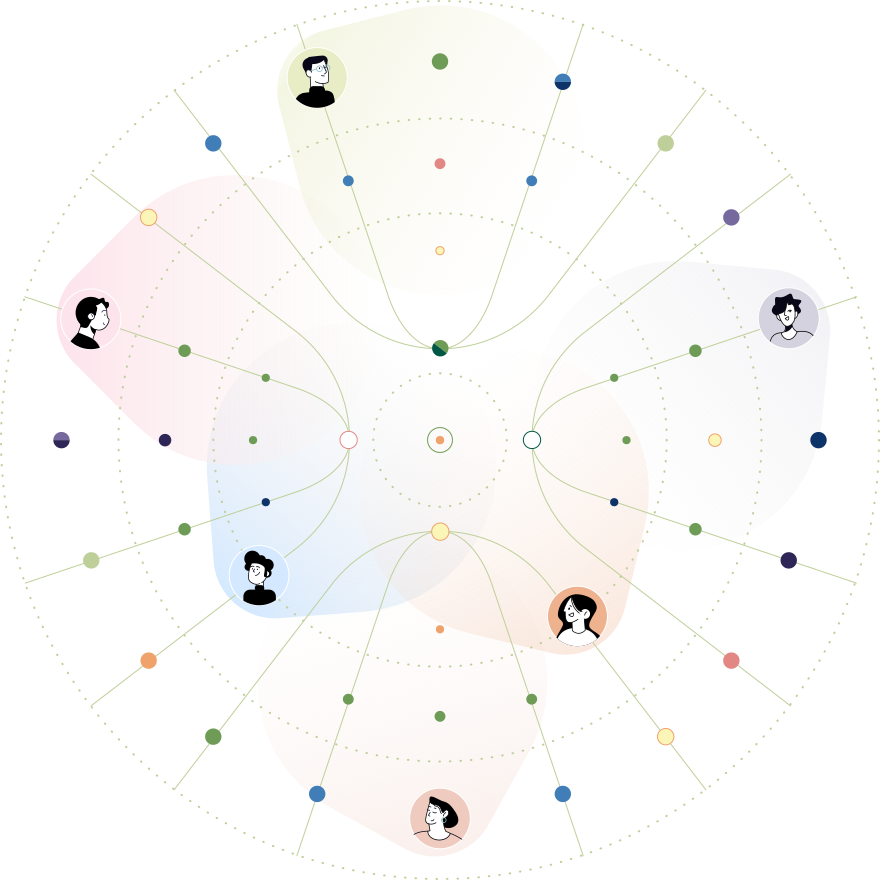
Coaching to the Organization shiftsfocus from individuals to the system—where roles, relationships, and strategy come together to create clarity and motion.
Coaching at the Intersection of
Systems,
Strategy,
and
Team Dynamics
together creates the base for organizational cohesion.
The Evolution of Coaching to the Organization: A Brief Recap
Pre-1990s
Origins & Individual Performance Coaching
Rooted in mentoring, counseling, philosophy. Individual growth & personal performance; self-awareness; informal coaching / life coaching.
1990s – early 2000s
Formalization & Leadership / Executive Coaching
Rise of formal coaching schools, certifying bodies; coaching becomes tool for leadership dev; more one-on-one executive coaching; outcomes tied to productivity, leadership presence.
Mid 2000s – 2010s
Origins & Individual Performance Coaching
Rooted in mentoring, counseling, philosophy. Individual growth & personal performance; self-awareness; informal coaching / life coaching.
2015–2022 approx
Coaching for Transformation & Systems Coaching
This chapter required coaches to reskill—developing systems thinking, the ability to facilitate collective dialogue, and sense-making in complexity—while also linking coaching more directly to measurement, alignment, and organizational outcomes.
2023 – Present
Enterprise / System-Scale Coaching & Integration
Currently, coaching is no longer the domain of external experts alone—leaders, HR partners, and internal coaches are asked to embed coaching into everyday practices. The ask is to activate systemic clarity, model relational trust, and integrate coaching into strategy, values, and technology-enabled ways of working.
COACHING TO THE ORGANIZATION
Strategic Lens
Where leadership intent turns into shared movement. Coaching makes strategy relational by aligning roles, relationships, and decisions so plans become practices teams live and own together.
Coaching to the Organization connects strategy with daily rhythms—turning intent into practices teams can live and own together.
Strategy endures when intent, relationships, and systems move
in alignment. Without this, momentum quickly fades.
Coaching Where Strategic Intent Turns Into Shared Meaning
Every strategy is relational. Its success depends on how team members understand intent, connect with each another, and co-create clarity. Coaching to the Organization makes these connections visible, helping leaders design rhythms and conversations that turn plans into healthy performance.
Seen through the Systems Lens, strategy is communicated top-down and through the patterns, structures, and feedback loops that carry it into daily work.
What’s Changing for Leaders: Coaching to the Organization
Executive Leaders (CEO, C-Suite, Presidents)
Foundational
Drive strategy and culture top-down; align through cascaded goals.
Shifted
Healthy performance comes from system-wide alignment and pattern recognition.
Fresh
Act as sense-makers and pattern-shapers, not just decision-makers.
Cross-Functional Leadership Teams
Foundational
Cohesion built through meetings, reporting lines, and siloed challenge resolution.
Shifted
Healthy performance grows through shared sense-making and intentional rhythms.
Fresh
Move from managing silos → to co-owning outcomes and clarity.
People & Culture / HR Partners
Foundational
Coaching = skill-building programs for individuals.
Shifted
Organizational health is systemic; trust and alignment towards healthy performance.
Fresh
From “training programs” → to embedding coaching into everyday.
Middle Management / Functional Leads
Foundational
Translate strategy into tasks and supervise delivery.
Shifted
Value lies in activating clarity and relational alignment
Fresh
From “messengers of direction” → to designers of team clarity.
Transition Teams (Project Teams, Integration Groups)
Foundational
Wait for leaders to provide clarity and role definitions.
Shifted
Generate clarity by co-creating norms, roles, and trust patterns.
Fresh
From “receivers of answers” → to collective owners of change.
The Leader’s Role: Mobilizing Systemic Clarity
Where Leaders Want to Stretch
Core Capabilities
Systemic Leader
of a
A
See the system, not just the symptoms
Recognize the dynamics, patterns, and growing edges shaping outcomes across the organization.
B
Design with intention
Align roles, rhythms, and ways of working that support clarity and cohesion across functions.
C
Move towards intentionality + reflection
Model pausing, asking, and perspective-taking—especially in moments of uncertainty or unclarity.
COACHING TO THE ORGANIZATION
System Lens
Where structures and rhythms shape alignment. Coaching reveals often hidden patterns, making feedback loops visible and assists leaders to design conditions for sustainable clarity and cohesion.
Systems are always in motion—coaching to the organization reveals where clarity accelerates or slows.
This lens turns structures and rhythms into levers
for adaptability and cohesion.
Coaching Where Structures and Rhythms Shape Alignment
Every system carries patterns. Structures, rhythms, and feedback loops guide how work actually moves, often in ways leaders cannot see.
Coaching to the Organization through the System Lens makes these invisible dynamics visible—helping leaders read patterns, design rhythms, and create conditions where the system aligns and adapts.
When leaders work with full system understanding, clarity pops faster, and adaptability and cohesion result.
Experience-Shaping Design Considerations
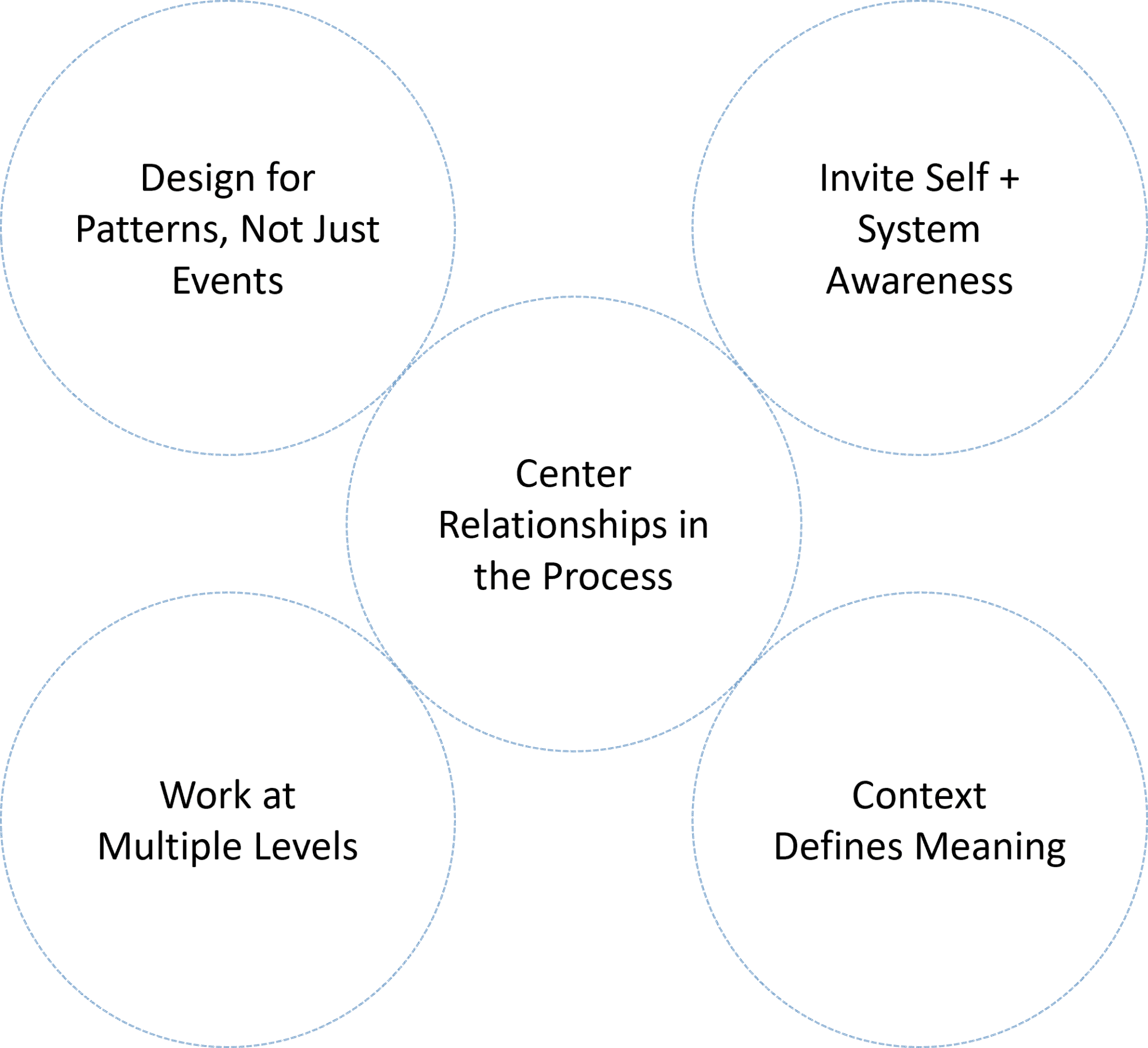
Shaping experiences is less about one-time solutions and more about cultivating patterns, relationships, and awareness that endure. Coaching to the organization brings attention to how people and systems interact, ensuring that change is lived at multiple levels and adapted with context.
COACHING TO THE ORGANIZATION
Human
Dynamics Lens
Where trust and dialogue become fundamentals for healthy performance. Coaching to the Organization focuses on relationships, building cultures where people co-create clarity, strengthen transparency, and move forward together.
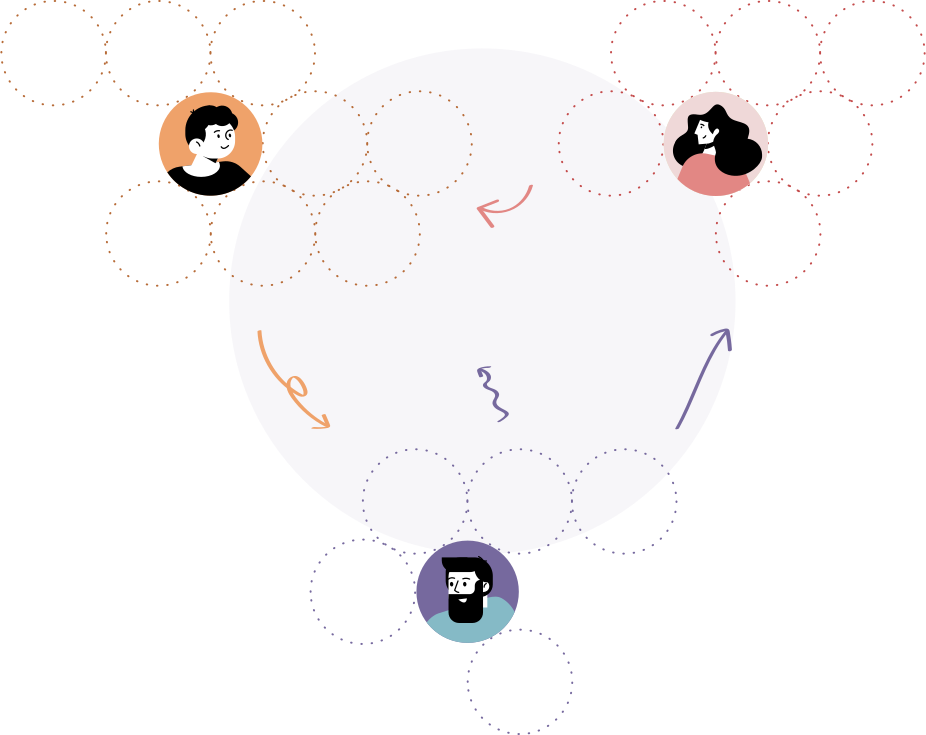
The invisible space between roles—between people—is where clarity is co-created—or left unclear.
Instead of focusing only on individuals, this approach attends to the relationships and patterns where transparency, trust, and clarity are built.
Coaching Where Structures and Rhythms Shape Alignment
In every organization, growth is relational. Healthy performance doesn’t just come from strategy or structure—it emerges from how people connect, communicate, and co-own change.
Coaching to the Organization through the Human Dynamics Lens focuses on making these invisible dynamics visible: building trust across boundaries, shaping dialogue that strengthens transparency, and creating cultures where clarity and cohesion result.
When teams see how they relate, they move differently—together. Transparency matters.
What Shifts When We Coach Relationship Systems?
Unexpected + Untapped Benefits for Leaders + Teams Who Apply This Approach
What we know to be true in this work
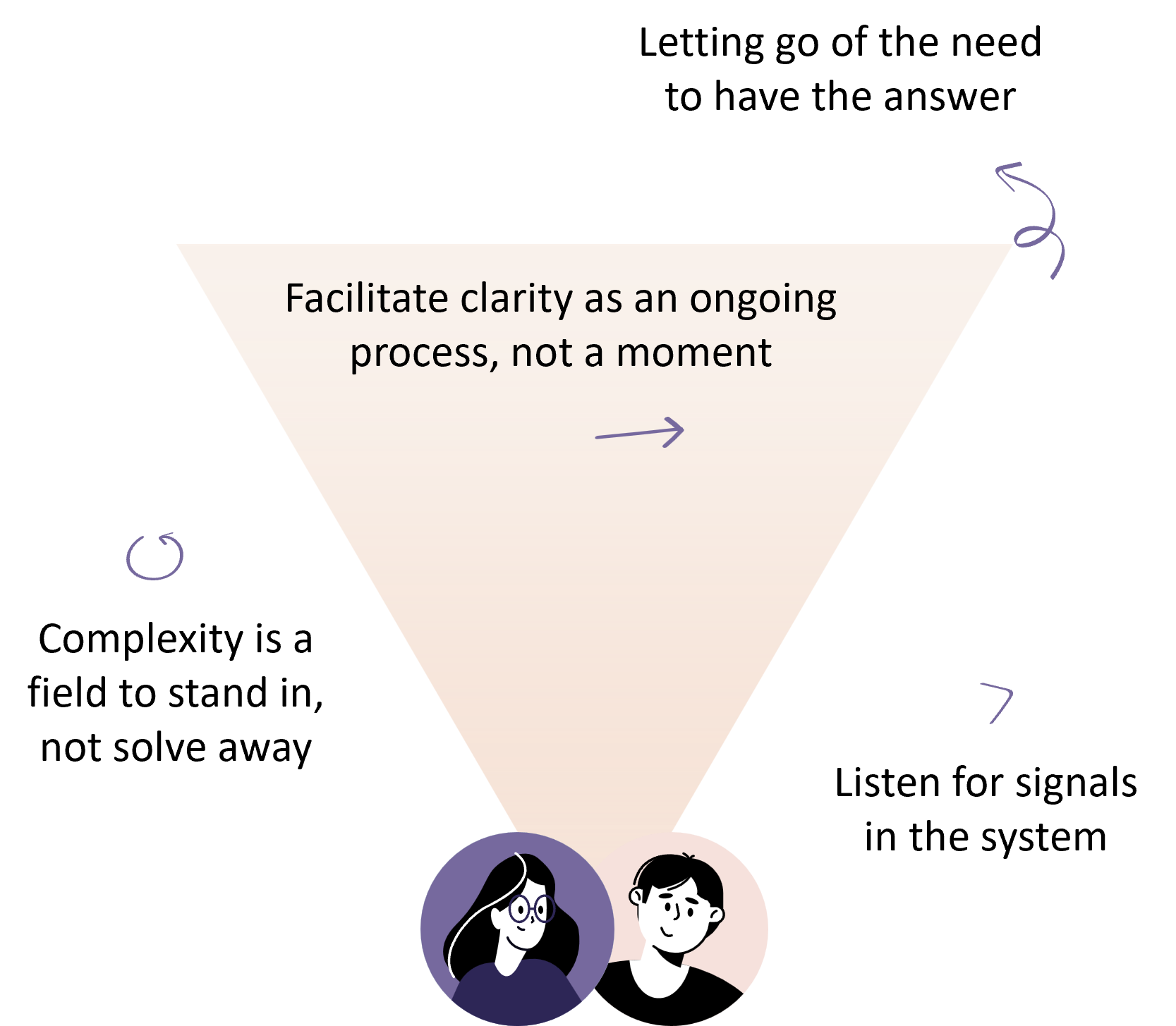
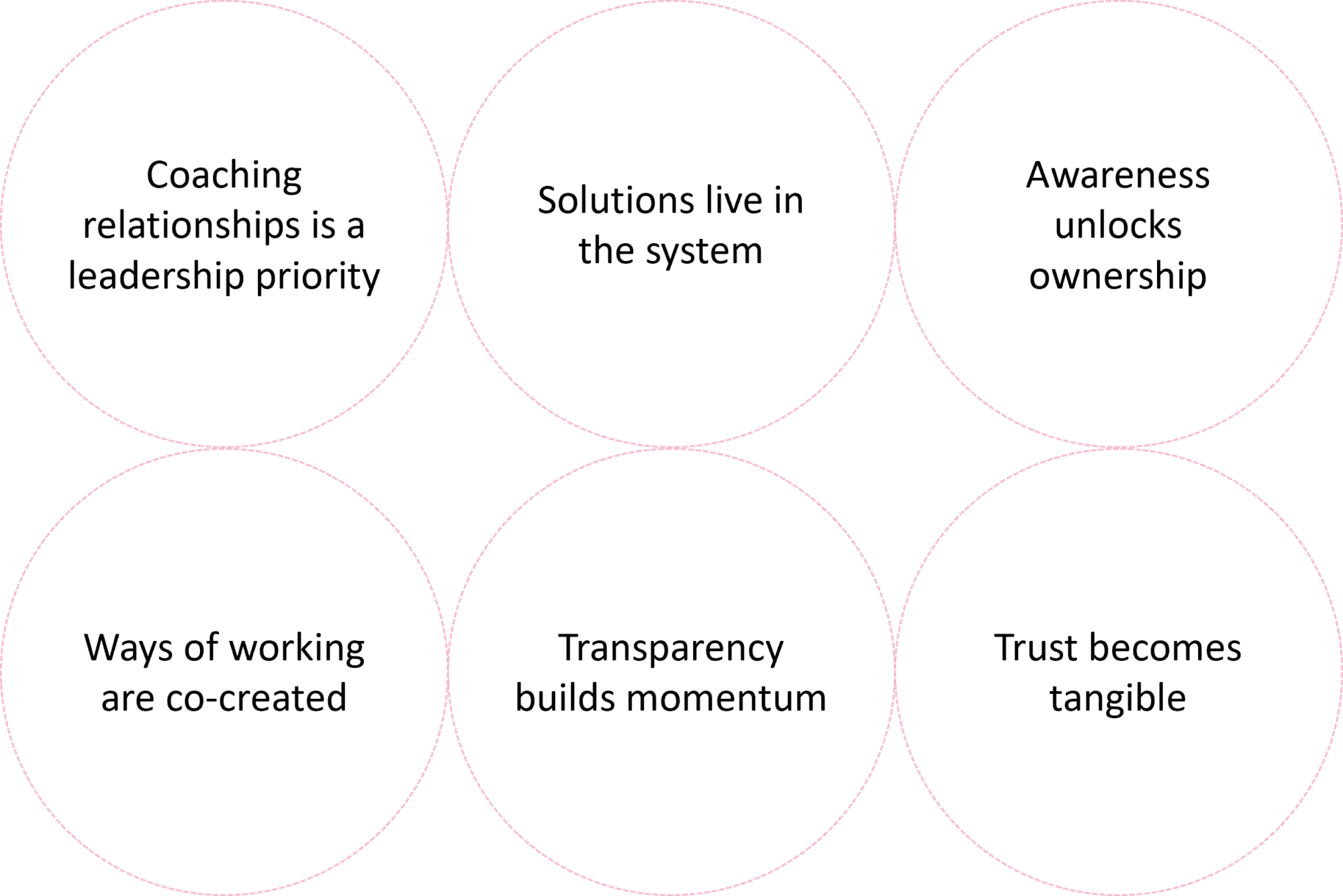
Everyone shapes the system. Even small shifts can generate meaningful momentum.
Relationships drive or slow change. Organizational growth is relational—made up of many individual humans.
Clarity is co-created. It emerges at different times for different people, through shared sense-making and intentional dialogue.
Founded in 2013, Nikoleta & Associates is a female-owned boutique consultancy working at the intersection of strategy, reinvention, and innovation, while holding the human experience in business at its core.
Meet the team that collaborates with leaders and teams—creating conditions for strategy, reinvention, and innovation to come to life through highly contextual programs tailored to your unique context.