“How We Hold” is a collection of creative pieces from our Around the Organization practice. Each piece reflects our approach to shaping leadership and organizational capability—designed to support deeper understanding and forward movement in both thinking and action.
How We Hold
Meeting Cadence
The Meeting Cadence concept starts by asking: What are the key meetings in your organization? It then explores why the meeting exists, who attends, and whether it even needs to be a meeting. While strong team connections are essential to good work, we also look at how live moments can stay on-strategy.
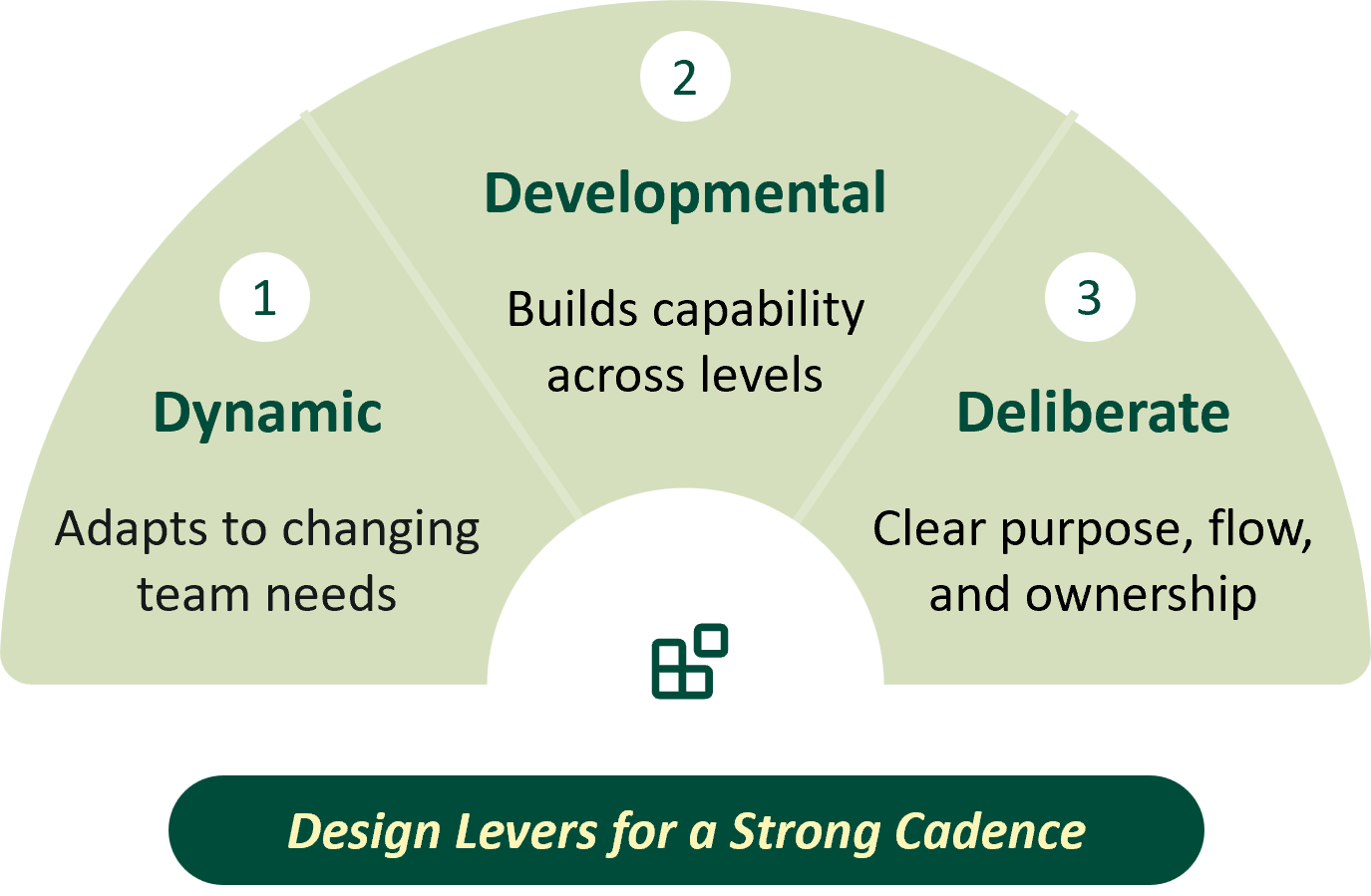
This approach offers a way to design for dynamic, developmental, and deliberate times together—enabling thoughtful decision making, inspiring engagement, and opening conversations that move the business and team forward. Intentional cadence design becomes a powerful rhythm for aligning around the big picture while advancing small, meaningful actions.
The following pages offer a closer look at how this concept can be applied to your team’s rhythms and strategic priorities.
Our Philosophy Behind the Meeting Cadence
Dynamic, strategic, developmental, and deliberate.
To find and orchestrate a flow is more of an art than a science—especially when designed for mutual benefit and developmental growth. Sustainable results often come from things we cannot fully plan for, but we can commit to a next gen, a next level, or mastery of our craft.
Facilitating impactful rhythms and coaching to the organization are core leadership activities. When designed intentionally, meeting cadences become a lever for strategic enablement—ensuring that what is discussed, decided, and done directly supports the implementation of strategy.
If we shift meetings beyond updates to become spaces of inspiration, engagement, and development, we create the conditions for more thoughtful conversations that move the business forward.
With that mindset, we acknowledge that change is life and ongoing. As leaders and human beings, we evolve—so the cadence must evolve too. The work is never finished, and always adaptive.
Meeting Design Prompts
Are our meetings enabling strategy or just repeating activity?
What kind of ethos and rituals are our conversations reinforcing?
How intentionally am I using cadence to enhance leadership and capability?
Sample
Applied to a luxury retail organization for HR/People team at request of CHRO
Motivation for the Ask
As part of the CHRO’s strategy implementation plan, and with the arrival of new staff members, a near term ask was to review her meeting with a focus on internal department meetings and her respective ELT and CEO time with a desire to raise the percentage of time with the latter.
Unpacked reason for weekly sessions, identification of what was collaboration, updates and what can be done offline.
Established the 80/20 direction – 80% of time with ELT and CEO, 20% with team.
An initial key partnership was with the Executive Administrator. The next phase, informed by the 80/20, is to establish the HR/People Team onsite/offsites as accelerators and checkpoint for on-strategy delivery.
At a luxiry retail organization and specifically within the HR/People team, build a cadence to support the current strategy. The intent was for each meeting—1:1s, team syncs, and strategic offsites – to be opportunities to coach to and mobilize the functional strategy.
Considerations for the HR/People Team’s Organization
A well-considered cadence supports thoughtful communication, alignment
and can also enhance capability if held within a coaching process.
A
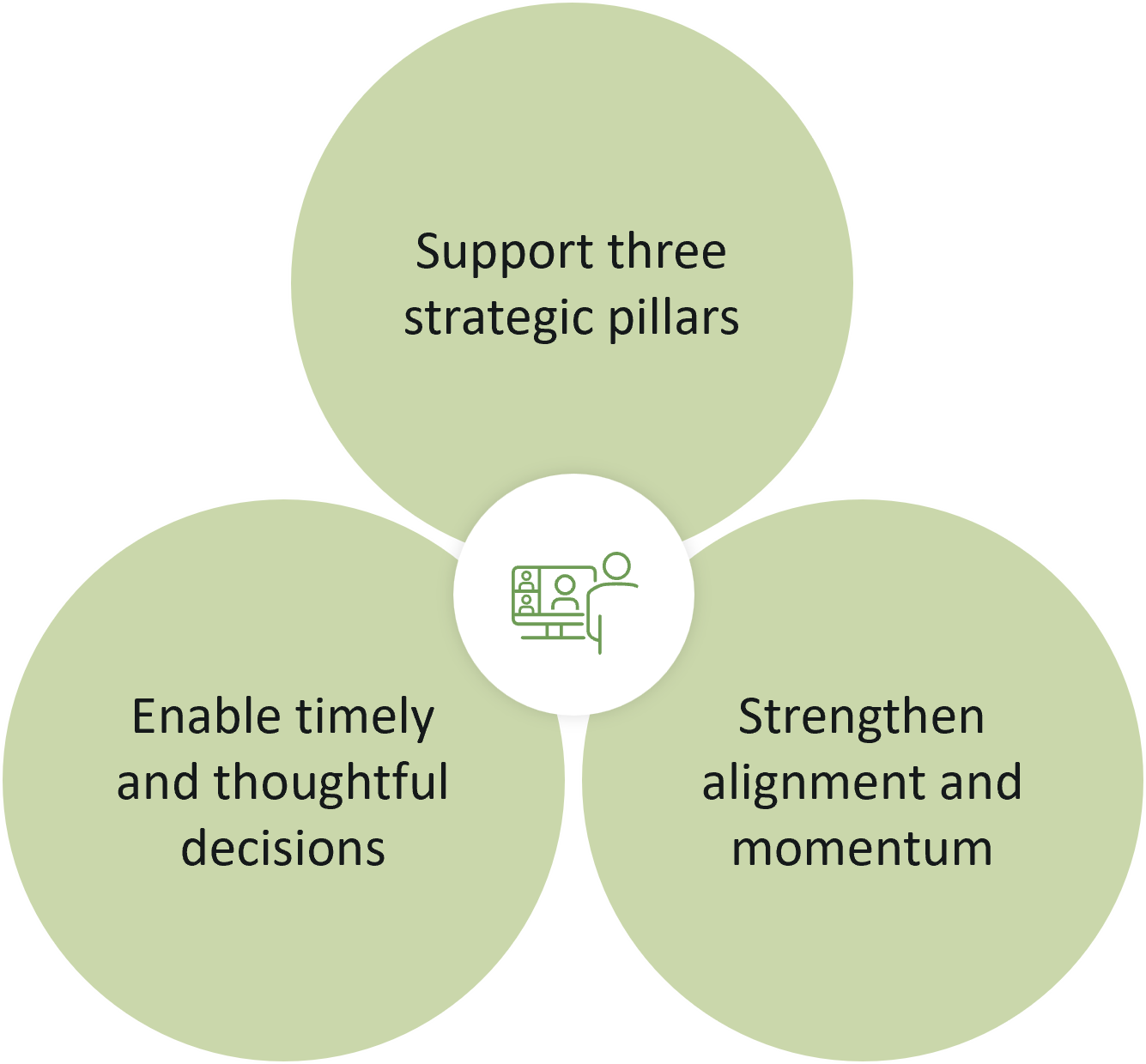
Support three strategic pillars
Anchor meeting content to the organization’s strategy
Ensure visibility and ownership of pillar-related work
Link updates + planning to strategy and possibilities
B
Enable timely and thoughtful decisions
Hold meetings as forums for prioritization + dialogue, not just updates
Build in reflection time and data inputs to improve decision + choices
Establish clear pathways for closing decisions
C
Strengthen alignment and momentum
Reinforce shared direction through consistent messaging
Sequence meetings to support cascading communication
Highlight interdependencies across teams and projects
Founded in 2013, Nikoleta & Associates is a female-owned boutique consultancy working at the intersection of strategy, reinvention, and innovation, while holding the human experience in business at its core.
Meet the team that collaborates with leaders and teams—creating conditions for strategy, reinvention, and innovation to come to life through highly contextual programs tailored to your unique context.